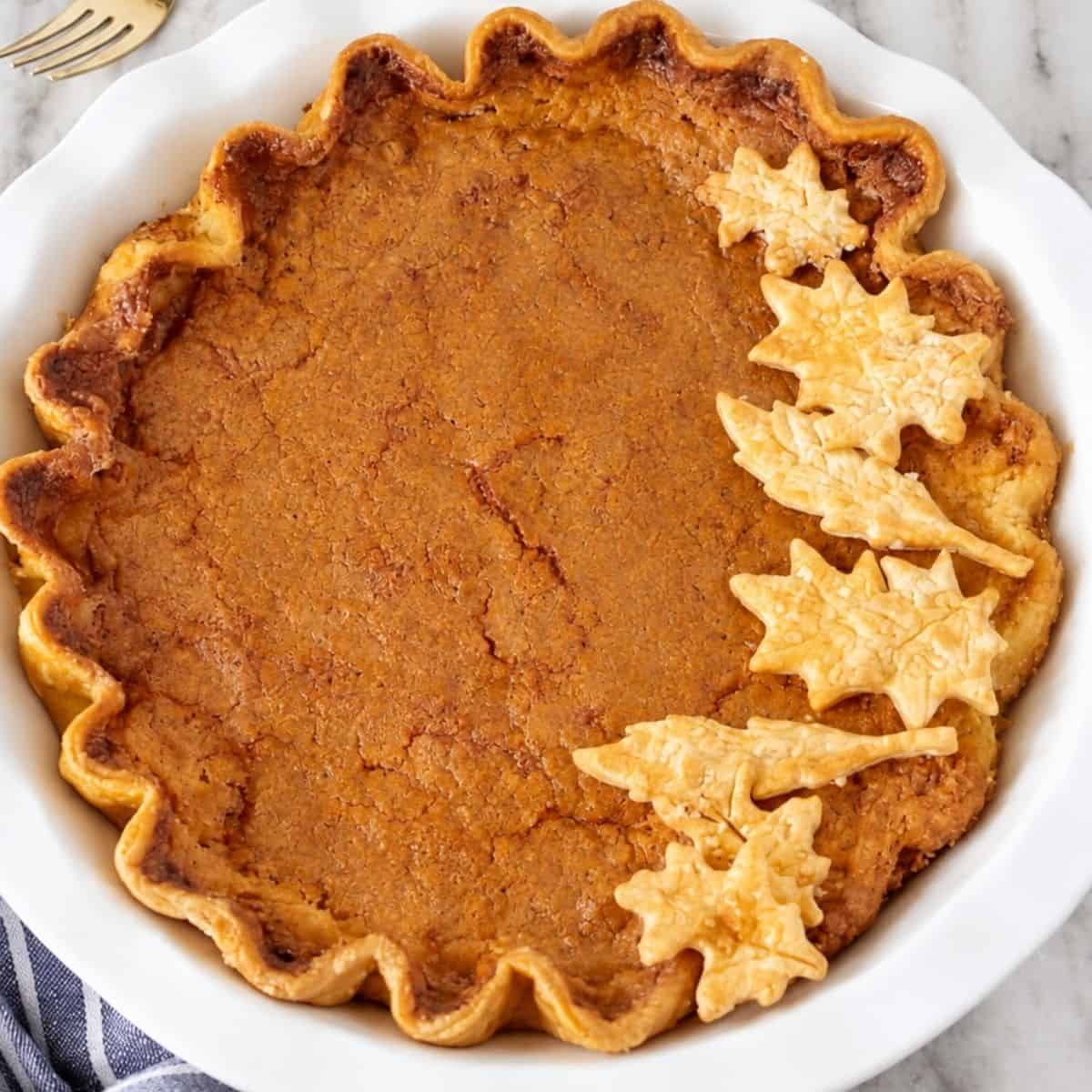
Buttermilk Pie Recipe (Easy & Creamy)
Equipment
- pie plate
- oven
- mixer
Ingredients
- ½ cup unsalted butter – at room temperature
- 1 ¼ cups sugar
- 3 large eggs – at room temperature
- 4 tablespoons all-purpose flour – sifted
- 1 pinch salt
- 1 cup full-fat buttermilk – chilled
- 1 teaspoon vanilla extract
- 1 dash nutmeg – preferably freshly ground
- 1 lemon – zest and juice
- 1 9- inch pie crust – ready-made, thawed, and unbaked
Instructions
- Preheat the oven: Position the oven rack in the middle and preheat to 350°F (180°C).
- Prepare the pie crust: Lightly flour a work surface and roll the dough into a 12-inch circle. Fit it into an ungreased 9-inch pie plate, trim the excess dough, and crimp the edges.Note: For a crisper bottom, line the crust with parchment paper, fill with pie weights or dried beans, and pre-bake for about 15 minutes. Transfer to a wire rack and let it cool completely before filling. Skip pre-baking if you prefer a softer bottom.
- Make the custard filling: Cream the softened butter and sugar in a large bowl with a hand mixer. Beat in the eggs one at a time, followed by the flour and salt. Add the buttermilk, vanilla, nutmeg, lemon juice, and lemon zest. Whisk until smooth and combined.
- Bake the pie: Pour the custard into the prepared pie crust and bake for 55–70 minutes, until the top is set and the center is slightly jiggly but no longer liquid.Note: Baking time may vary depending on your oven, the type of pie plate, and whether the crust was pre-baked.
- Cool and serve: Transfer the pie plate to a wire rack and let the pie cool completely for about 2 hours. Cover and refrigerate until chilled, then slice and serve.
Recipe Video
Recipe Notes
Storage Information
Make Ahead: Bake the pie a day in advance, let it cool completely, and refrigerate until serving. Chilling also helps the custard firm up for cleaner slices. Refrigerator: Store the cooled buttermilk pie covered in the refrigerator for up to 3 days. Cover the pie plate with plastic wrap or transfer individual slices to an airtight container. Buttermilk pie is best served chilled, but you can let individual slices sit at room temperature briefly for a slightly softer texture. Freezer: Freezing isn't recommended because the custard can become watery or soggy after thawing. Refrigeration is the better option for preserving its creamy texture.Nutrition
** Nutrition labels on easyanddelish.com are for educational purposes only. This info is provided as a courtesy and is only an estimate, since the nutrition content of recipes can vary based on ingredient brand or source, portion sizes, recipe changes/variations, and other factors. We suggest making your own calculations using your preferred calculator, based on which ingredients you use, or consulting with a registered dietitian to determine nutritional values more precisely.
Please note that health-focused and diet information provided on easyanddelish.com is for educational purposes and does not constitute medical advice, nor is it intended to diagnose, treat, cure, or prevent disease. Consult with your doctor or other qualified health professional prior to initiating any significant change in your diet or exercise regimen, or for any other issue necessitating medical advice.