
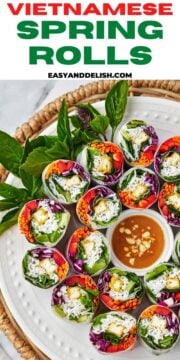
Fresh, colorful, and packed with crunch, these Vietnamese Spring Rolls are an easy way to turn simple vegetables, rice noodles, herbs, and crispy tofu into a light but satisfying meal. Everything is wrapped in delicate rice paper and served with a creamy, savory peanut dipping sauce. They’re naturally vegan, easy to customize, and perfect for lunch, appetizers, or a fresh dinner. If you enjoy colorful veggie-packed meals, try my Thai Mango Salad
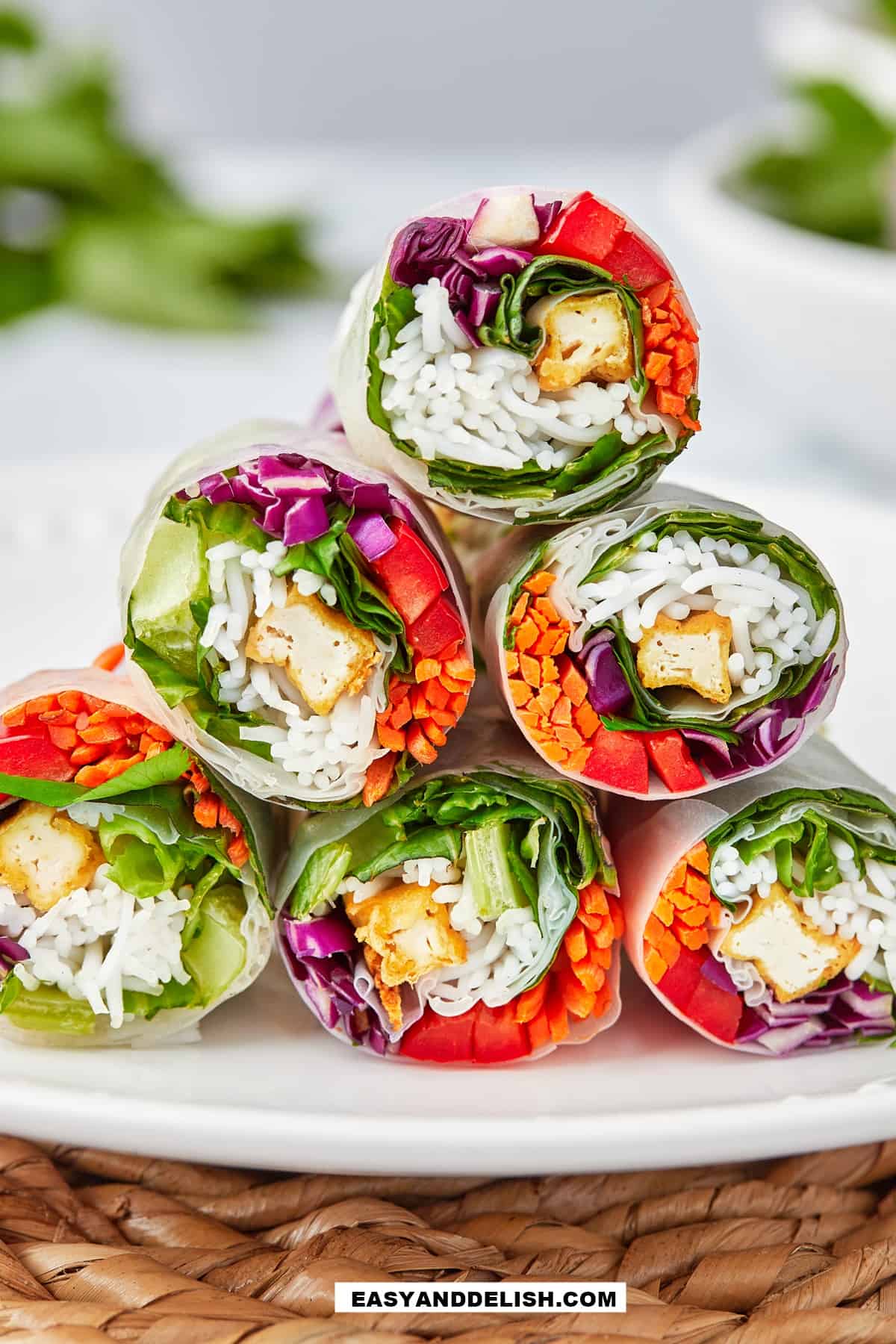
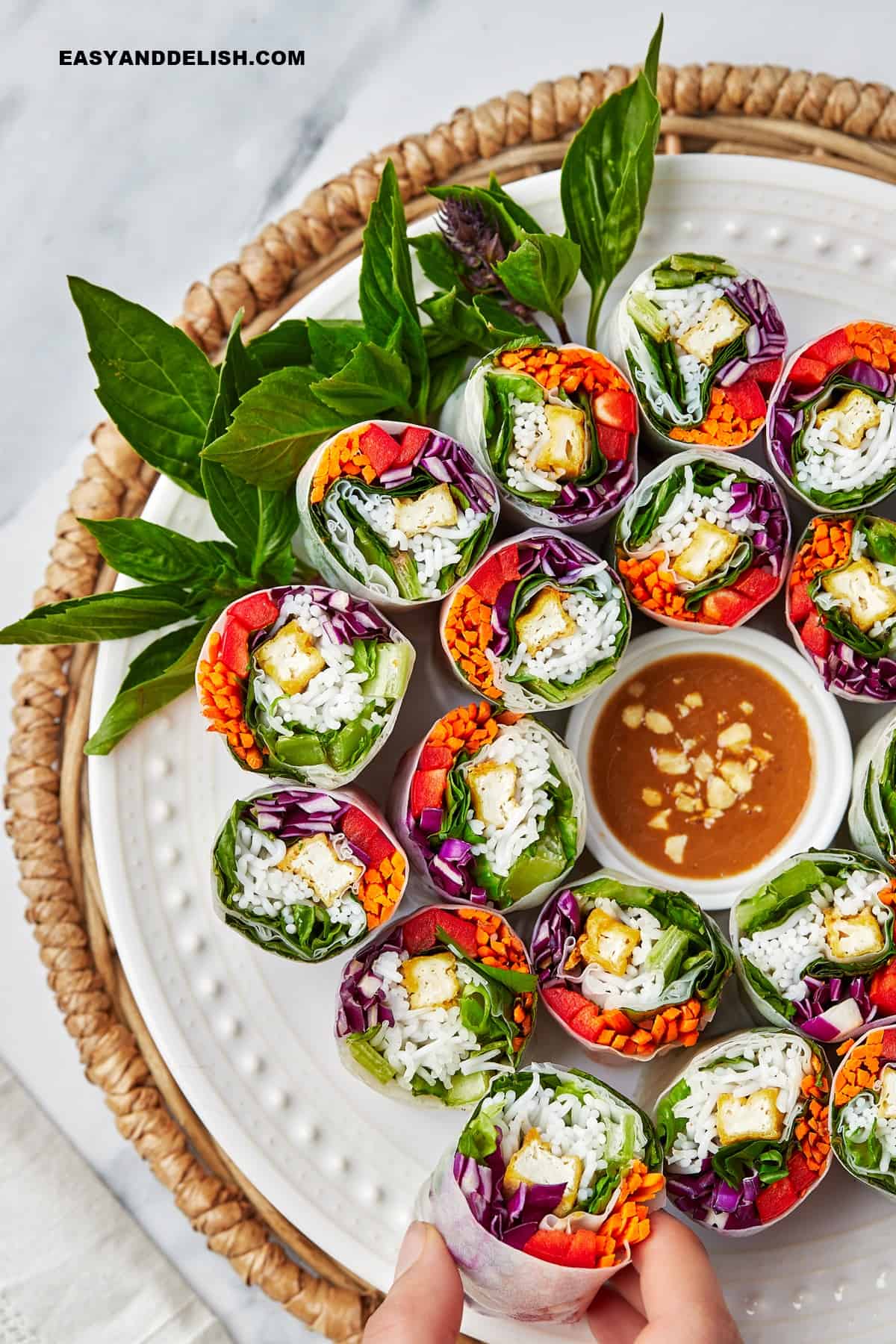
These Vietnamese Spring Rolls are fresh, crunchy vegan rolls filled with crispy tofu, rice noodles, colorful vegetables, and fresh herbs, all wrapped in delicate rice paper. They’re served with a creamy peanut dipping sauce and work well as a light lunch, appetizer, or dinner. The key to easy rolling is softening—not soaking—the rice paper and keeping the filling compact so the wrappers don’t tear.
Quick Look: Vietnamese Spring Rolls
- ⏱️ Prep Time: 30 minutes
- 🔥 Cook Time: 10 minutes
- ⏲️ Total Time: About 40 minutes
- 🥢 Cuisine: Vietnamese-inspired
- 🌱 Diet: Vegan and dairy-free
- 🍜 Filling: Rice noodles, crispy tofu, fresh vegetables, and herbs
- 🥕 Vegetables: Fresh, colorful, and easy to customize
- 🥜 Dipping Sauce: Creamy peanut sauce with savory, sweet, tangy, and spicy notes
- ✨ Texture: Soft rice paper with crisp vegetables, tender noodles, and golden tofu
- 🌿 Flavor: Fresh, herby, nutty, savory, and slightly spicy
- 🍱 Best For: Lunch, appetizers, light dinners, or meal prep
- 🔄 Customizable: Swap vegetables, herbs, noodles, or protein to suit what you have
- ⭐ Difficulty: Easy to moderate — rolling becomes much easier once you get the rice paper texture right
- ❄️ Make Ahead: Components can be prepared ahead, but the rolls are best assembled close to serving
- Why This Recipe Works
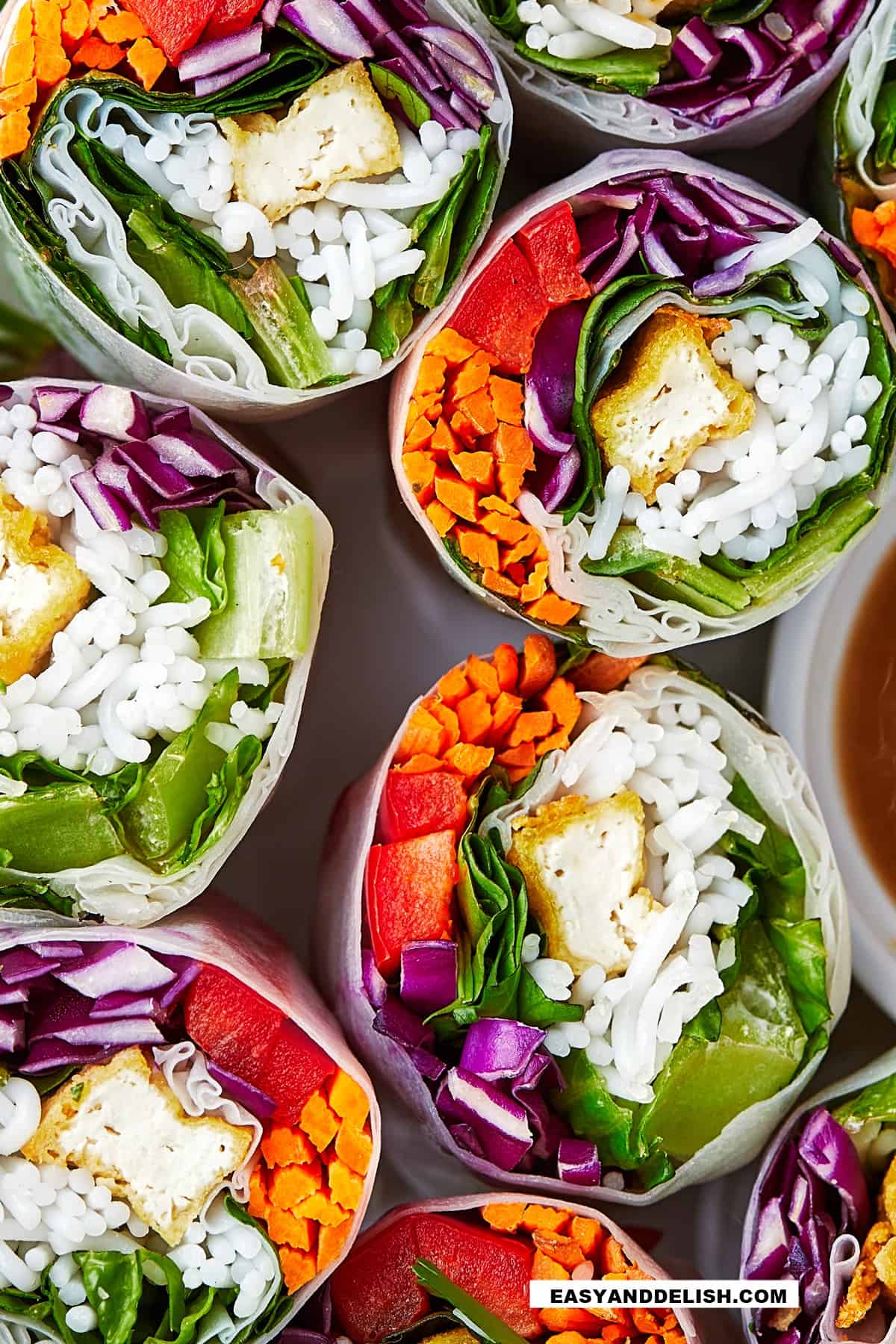
- These Vietnamese Spring Rolls combine contrasting textures and flavors in every bite: crisp vegetables, tender rice noodles, fresh herbs, and golden tofu wrapped in soft rice paper. The key is to soften the rice paper without soaking it, which keeps the wrappers flexible enough to roll without becoming sticky or tearing. The creamy peanut sauce adds richness and balances all those fresh ingredients.
- For another fresh, veggie-forward meal with plenty of texture, try my Shirazi Salad.
SUMMARIZE & SAVE THIS CONTENT ON
Jump to:
Ingredients
For the Vietnamese Spring Rolls
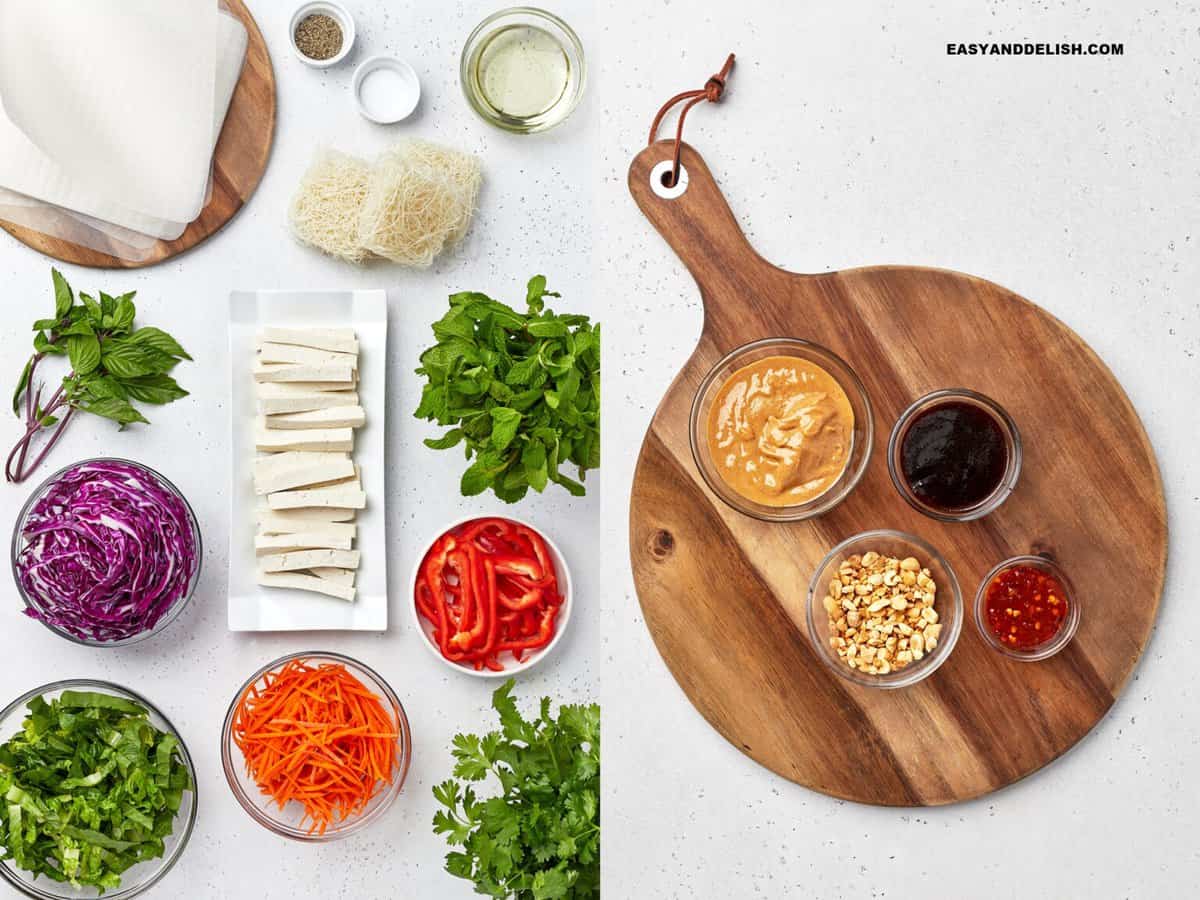
- Rice vermicelli noodles – Use 6 ounces. These thin rice noodles create the soft, tender base of the filling without making the rolls bulky. I recommend sticking with vermicelli rather than thicker rice noodles for the best texture. If you have extra rice noodles on hand, use them in my Shrimp Thai Noodles Stir Fry for another easy meal.
- Vegetable oil – You’ll need 1–2 cups for frying, depending on the size of your pan. Use vegetable oil or another neutral oil with a smoke point of at least 400°F, such as canola, avocado, peanut, sunflower, or refined corn oil.
- Extra-firm tofu – Use one 16-ounce block, drained, well pressed, and cut into ½-inch matchsticks. Removing excess moisture helps the tofu brown and hold together during frying.
- Kosher salt and black pepper – Season the fried tofu with ½ teaspoon kosher salt and ¼ teaspoon ground black pepper. If using table salt, reduce it to ¼ teaspoon.
- Rice paper wrappers (bánh tráng) – You’ll need 12 square wrappers. Square rice paper is my preference because it is easier to roll and tends to break less, although round wrappers will also work.
- Romaine lettuce – Use 2 cups shredded, or about ½–1 head. It gives the rolls a fresh, crisp base.
- Red cabbage – 1 cup shredded adds crunch and vibrant color.
- Red bell pepper – 1 cup, cut into thin strips, or about 1 medium pepper, adds sweetness and crisp texture.
- Carrots – 1 cup shredded, about 2–3 medium carrots, for additional crunch and color.
- Fresh mint – Use fresh mint leaves for their cooling, aromatic flavor. Do not substitute dried mint.
- Fresh Thai basil – Thai basil gives the rolls their distinctive herbaceous flavor, but fresh Italian basil is a good substitute if Thai basil isn't available.
- Fresh cilantro – Use fresh cilantro for its bright flavor. If you don't like cilantro, skip it rather than replacing it with parsley, which doesn't work as well with the other flavors in this recipe.
For the Peanut Dipping Sauce
- Chopped peanuts – 2 tablespoons, optional, for a crunchy finish on top of the sauce.
- Peanut butter – ¼ cup creates the creamy base. If keeping the recipe vegan, check the ingredient label because some peanut butters contain honey or other added ingredients.
- Hoisin sauce – ½ cup gives the dipping sauce its sweet-savory depth. Check the label and choose a vegan hoisin if needed.
- Sambal oelek – 2 teaspoons add chile heat and acidity. You can reduce or omit it for a milder sauce, or substitute sriracha or crushed red pepper flakes.
- Warm water – Start with up to ¼ cup, adding it gradually until the peanut sauce reaches your preferred dipping consistency.
How to Make Vietnamese Spring Rolls
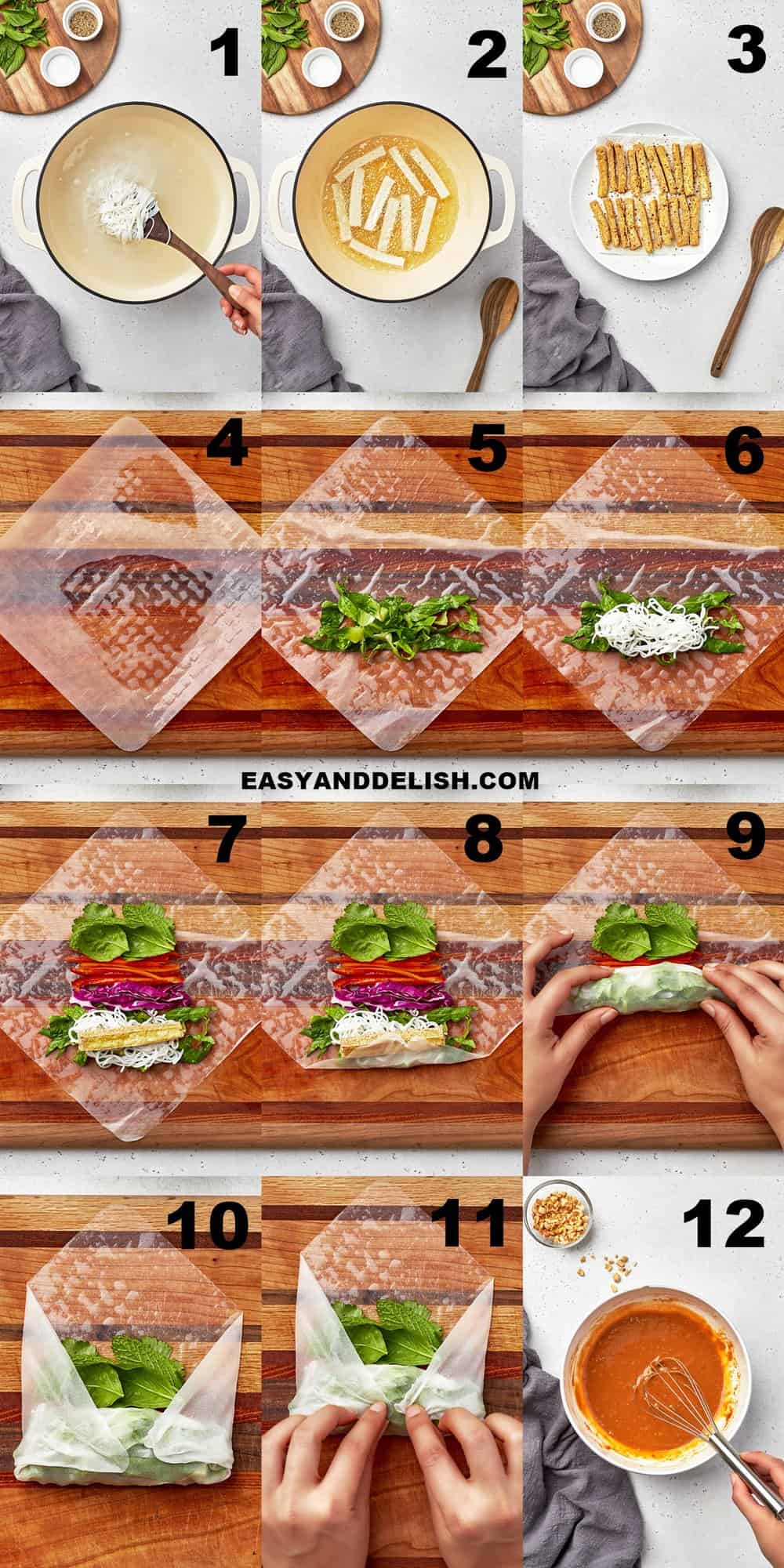
- Cook the noodles: Bring a large pot of water to a boil. Add the rice vermicelli noodles, cover the pot, and turn off the heat. Let the noodles soak and cook for 7–8 minutes or follow the package directions if they differ. Drain well and set aside. PIC. 1
- Heat the oil: Pour at least ½ inch of vegetable oil into a large pan or Dutch oven. Heat over medium-high heat for about 5 minutes. The amount of oil needed will depend on the size of your pan. PIC. 2
- Fry the tofu: Carefully add the pressed ½-inch tofu matchsticks to the hot oil and fry for 5–8 minutes, turning occasionally, until golden on all sides. Work in batches if necessary. Transfer to a paper towel-lined plate and immediately season with salt and pepper. PIC. 3
- Moisten the rice paper: Lightly dampen your work surface with water or grease it very lightly with vegetable oil to prevent sticking. Dip one rice paper wrapper into a large bowl of warm water, making sure the entire surface touches the water. Do not soak it. It will continue softening while you add the filling. PIC. 4
- Layer the lettuce: Place the softened rice paper on your work surface in a diamond shape, with one corner pointing toward you. Arrange a small bed of shredded romaine lettuce across the lower third of the wrapper. PIC. 5
- Add the noodles: Place a large pinch of drained vermicelli noodles over the lettuce, keeping the filling compact rather than spreading it to the edges. PIC. 6
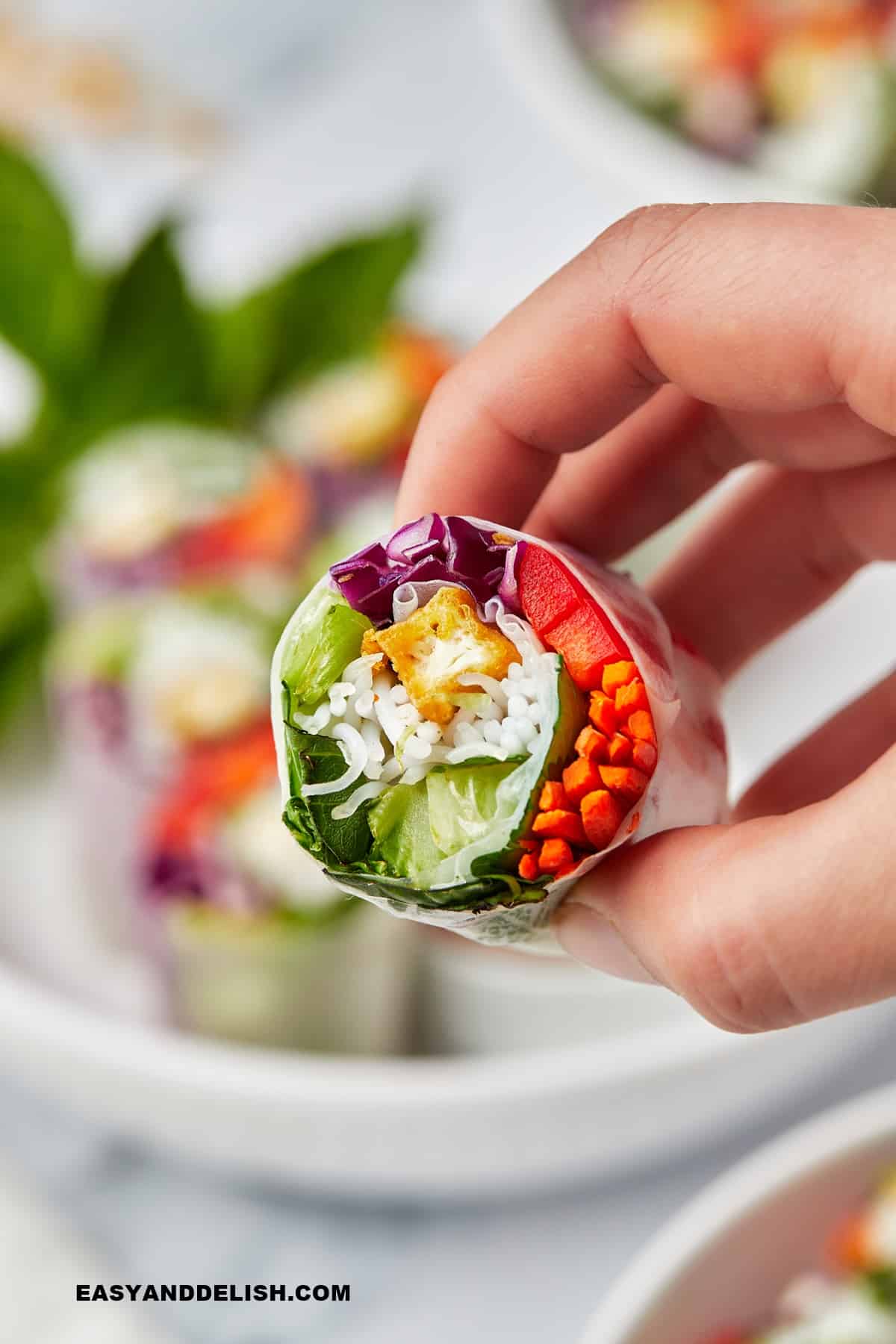
- Arrange the vegetables: Add a large pinch of red cabbage, 2–3 pieces of red bell pepper, and a large pinch of shredded carrots. Arrange the ingredients in horizontal rows working upward rather than piling everything in the center. This makes the spring rolls much easier to wrap. PIC. 7
- Add the tofu and herbs: Top with 1–2 pieces of fried tofu, followed by 2–3 mint leaves, 2–3 Thai basil leaves, and 2–3 cilantro leaves. Keep the filling fairly compact so the rice paper doesn't tear when rolled. PIC. 8
- Fold the bottom: Lift the lower third of the rice paper over the filling and gently roll it forward once, keeping the filling snug without pulling hard enough to tear the wrapper. PIC. 9
- Fold the sides: Fold the left and right corners inward over the filling, similar to folding a burrito. Keep the sides snug so the vegetables don't fall out. PIC. 10
- Roll and seal: Continue rolling gently from the bottom upward until you have a compact baton-shaped spring roll. The softened rice paper should cling to itself and seal naturally; if necessary, dab a little water along the seam. Cover each finished roll with a damp paper towel while you assemble the rest so the wrappers don't dry out. PIC. 11
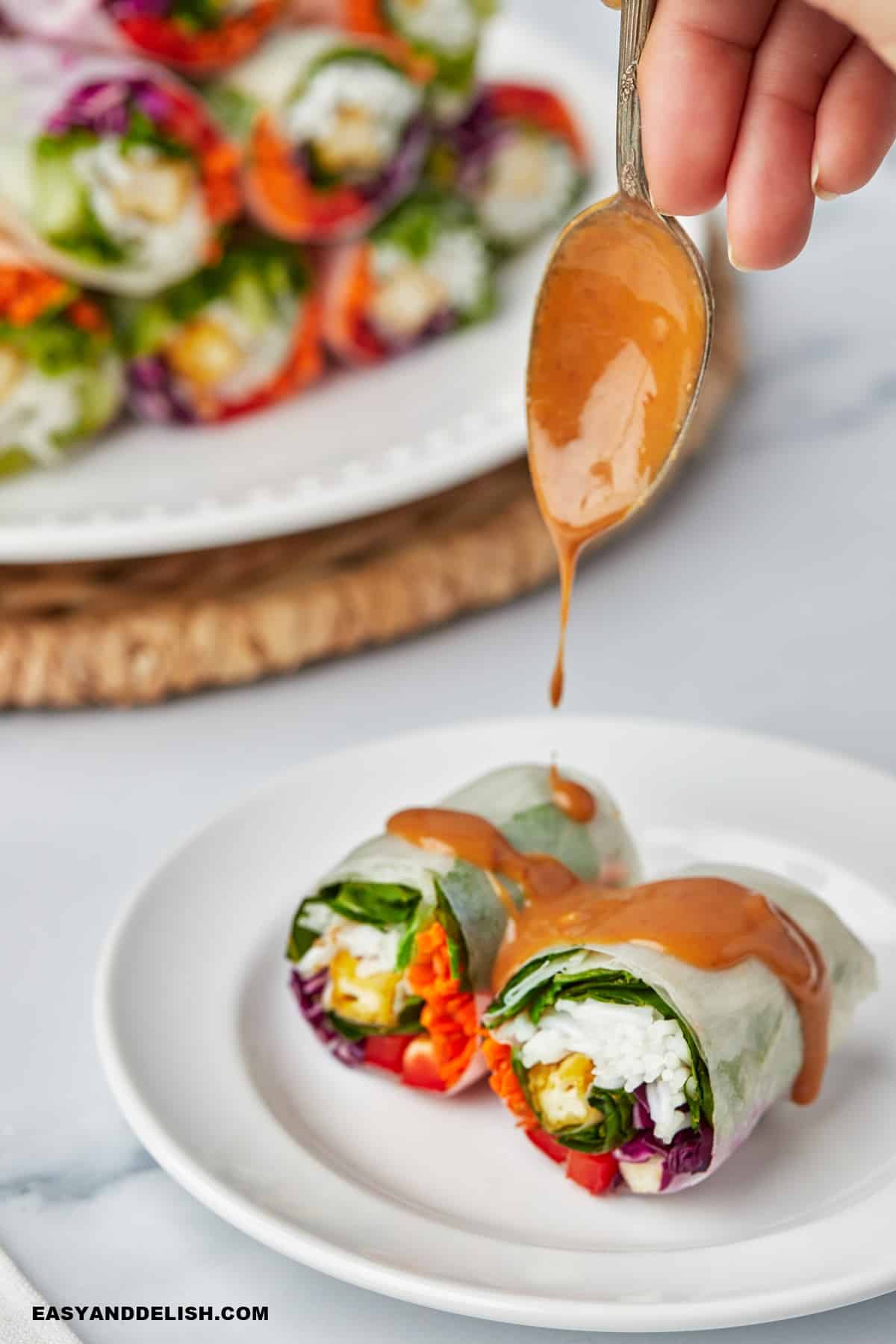
- Whisk the peanut sauce: Whisk together the peanut butter, hoisin sauce, and sambal oelek until smooth. Add warm water 1 tablespoon at a time until the sauce reaches your preferred dipping consistency. Top with the optional chopped peanuts and serve immediately with the Vietnamese spring rolls. PIC. 12
FAQ About Vietnamese Spring Rolls
These fresh Vietnamese spring rolls use softened rice paper wrappers and are served fresh rather than fried. Egg rolls typically use a thicker wheat-based wrapper and are deep-fried until crisp. The fresh rolls also tend to feature vegetables, herbs, rice noodles, and proteins such as tofu or shrimp.
The terminology can be confusing. In the U.S., “summer rolls” often refers to fresh Vietnamese rice paper rolls like this recipe, distinguishing them from fried spring rolls. Vietnamese cuisine includes both fresh rice-paper rolls and fried varieties, so the exact name can depend on context.
They can be, because rice paper and rice vermicelli are generally gluten-free. However, check every packaged ingredient—particularly the hoisin sauce and other sauces—and choose certified gluten-free versions when necessary.
It depends on how you're serving them. Plan on about 2–3 spring rolls per person as an appetizer and roughly 4–5 for a light meal, adjusting for the size of your rolls and what else you're serving.
I don't recommend freezing assembled fresh spring rolls. Rice paper and fresh vegetables don't maintain their best texture after freezing and thawing. Instead, prepare or store suitable components separately and assemble the rolls fresh.
Did You Love This Recipe? If you make this recipe and love it, stop back, give it a 5-star rating ★★★★★ and leave a comment.
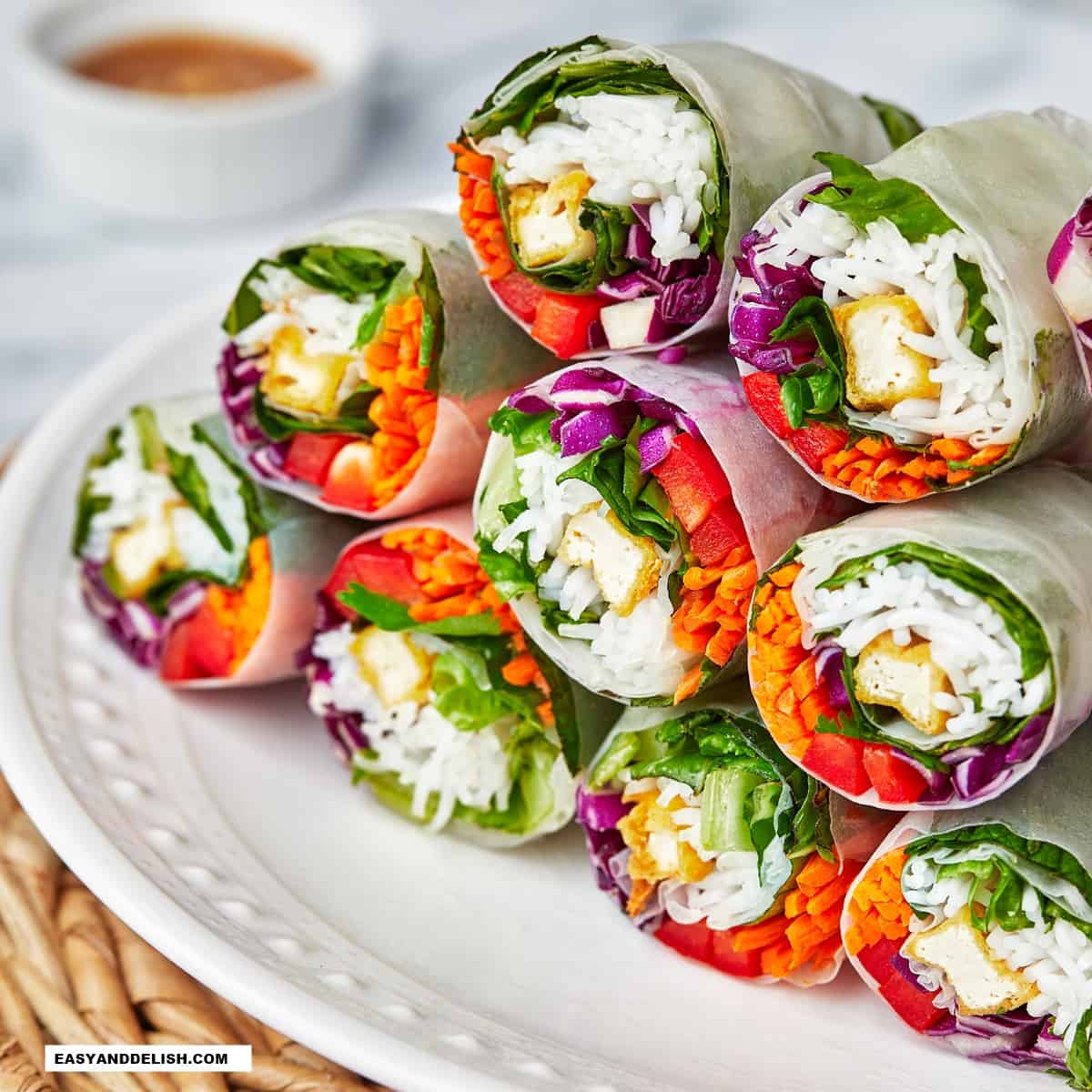
Vietnamese Spring Rolls (vegan)
Equipment
- large pot to boil the vermicelli noodles.
- Large dutch oven or pan to fry the tofu.
- Kitchen spider or slotted spoon for easily and gently removing the tofu
- Cutting board and Chef’s knife to cut the veggies
- Grater to shred the carrots
- large bowl for dipping the rice paper
Ingredients
For the Vietnamese Spring Rolls
- 6 ounces rice vermicelli noodles
- 1-2 cups vegetable oil for frying ( or any other neutral oil with a smoking point of 400 degrees F or more such as canola, avocado, peanut, sunflower, refined corn oil, etc)
- 16 ounce block extra-firm tofu (drained, pressed, and cut into ½-inch matchsticks)
- ½ teaspoon kosher salt or ¼ teaspoon table salt
- ¼ teaspoon ground black pepper
- 12 sheets square rice paper wrappers bánh tráng
- 2 cups shredded romaine lettuce about ½ - 1 head of romaine lettuce
- 1 cup shredded red cabbage about ¼ medium red cabbage
- 1 cup thinly julienned red bell pepper about 1 medium red bell pepper
- 1 cup shredded carrot about 2-3 medium carrots
- 1 bunch fresh mint leaves do NOT use any type of dried herbs please
- 1 bunch fresh Thai basil leaves Or Italian basil
- 1 bunch fresh cilantro do NOT replace it with parsley cause it is bitter for this recipe. You can skip it if you prefer
For the Peanut Sauce
- ¼ cup peanut butter (get a veganversion. If allergic to peanut, use almond or cashew butter instead)
- ½ cup hoisin (get a vegan version)
- 2 teaspoon sambal oelek (Indonesian chili paste – skip itor use sriracha or crushed red chili flakes)
- ¼ cup warm water
- 2 tablespoon chopped peanuts optional
Instructions
- COOK THE NOODLES: Bring a large pot of water to a boil. Add in the noodles, cover, and turn off heat, allowing the noodles to soak and cook for 7-8 minutes. Drain and reserve.
- PAN-FRY THE TOFU: In a large pan or a Dutch oven, heat at least a ½ inch of vegetable oil over medium-high heat for 5 minutes. NOTE: The amount of oil needed will depend on the size of your pan.
- Once the oil is hot, add the tofu and fry until golden, tossing now and then to fry all sides (about 5-8 minutes). Place the tofu on a paper towel-lined plate and season with salt and pepper. Depending on the size of the pan, you will need to work in batches
- MOISTEN THE RICE PAPER: Dampen your work surface with some water, or alternatively lightly grease it with vegetable oil. This will prevent the rice paper from sticking.
- Dip your sheet of rice paper into a large bowl of warm water. Make sure the entire surface of the rice paper has come in contact with water. NOTE: Please, do NOT soak the rice paper. It’ll soften as you add the fillings!
- FILL AND WRAP THE FRESH SPRING ROLLS: Place the rice paper in a diamond shape with one corner facing you. Create a small bed of shredded lettuce on the lower third of the wrapper, closest to you. Place a large pinch of vermicelli noodles on top, and then add 1 to 2 pieces of tofu on top of the cooked vermicelli noodles.
- Next, add a large pinch of red cabbage, 2 to 3 pieces of red bell pepper, a large pinch of carrots, 2 to 3 mint leaves, 2 to 3 Thai basil leaves, and 2 to 3 cilantro leaves. To make it easier to roll, it is better to add these in horizontal rows working upwards on your rice paper instead of a single pile. Make sure to check out our process photos!
- Fold the lower third of the rice paper over the filling, then fold in both the left and right corners over the filling. Continue to gently roll the rice paper from the bottom up until it forms a baton shape.
- The rice paper will cling and seal itself, but you can dab a bit of water along the seam edges if needed. Cover your Vietnamese spring rolls with a damp paper towel and repeat the process until you either run out of filling ingredients or the rice paper. NOTE: If you don’t cover them with a damp tower, they will dry out.
- PREPARE THE SAUCE: In a medium-sized bowl, whisk in the peanut butter, hoisin, and sambal oelek together until homogeneous. Add a tablespoon of warm water at a time to thin. The amount of water may vary depending on how thin or thick you prefer your sauce. Top the sauce with chopped peanuts and serve right away with your Vietnamese spring rolls. Enjoy!
Recipe Notes
- Wrapper count: Keep a few extra rice paper wrappers nearby in case one tears during assembly.
- Work one at a time: Moisten and fill each wrapper individually rather than softening several at once; softened rice paper can quickly stick together.
- Cool the fillings: Let the noodles and fried tofu cool before assembling. Warm fillings can make the rice paper overly soft and harder to handle.
- Keep fillings dry: Drain the noodles thoroughly and remove excess moisture from washed vegetables and herbs before assembling.
- Serving: Serve the spring rolls whole or slice them in half diagonally for appetizers. A sharp, lightly dampened knife makes cleaner cuts.
- Peanut sauce: Stir the dipping sauce again before serving. If it thickens while sitting, whisk in a small splash of warm water until smooth.
Nutrition
** Nutrition labels on easyanddelish.com are for educational purposes only. This info is provided as a courtesy and is only an estimate, since the nutrition content of recipes can vary based on ingredient brand or source, portion sizes, recipe changes/variations, and other factors. We suggest making your own calculations using your preferred calculator, based on which ingredients you use, or consulting with a registered dietitian to determine nutritional values more precisely.
Please note that health-focused and diet information provided on easyanddelish.com is for educational purposes and does not constitute medical advice, nor is it intended to diagnose, treat, cure, or prevent disease. Consult with your doctor or other qualified health professional prior to initiating any significant change in your diet or exercise regimen, or for any other issue necessitating medical advice.

These spring rolls are one of my favorite ways to enjoy a meal that feels fresh but still has plenty of texture and flavor. I especially love the combination of the crispy tofu with the crunchy vegetables and soft rice noodles. And that creamy peanut sauce makes every bite even better! — Valentina
We prefer everything vegan or vegetarian now when the crazy heat is on. This is great idea to make a change on our menu! Thank you Denise!