

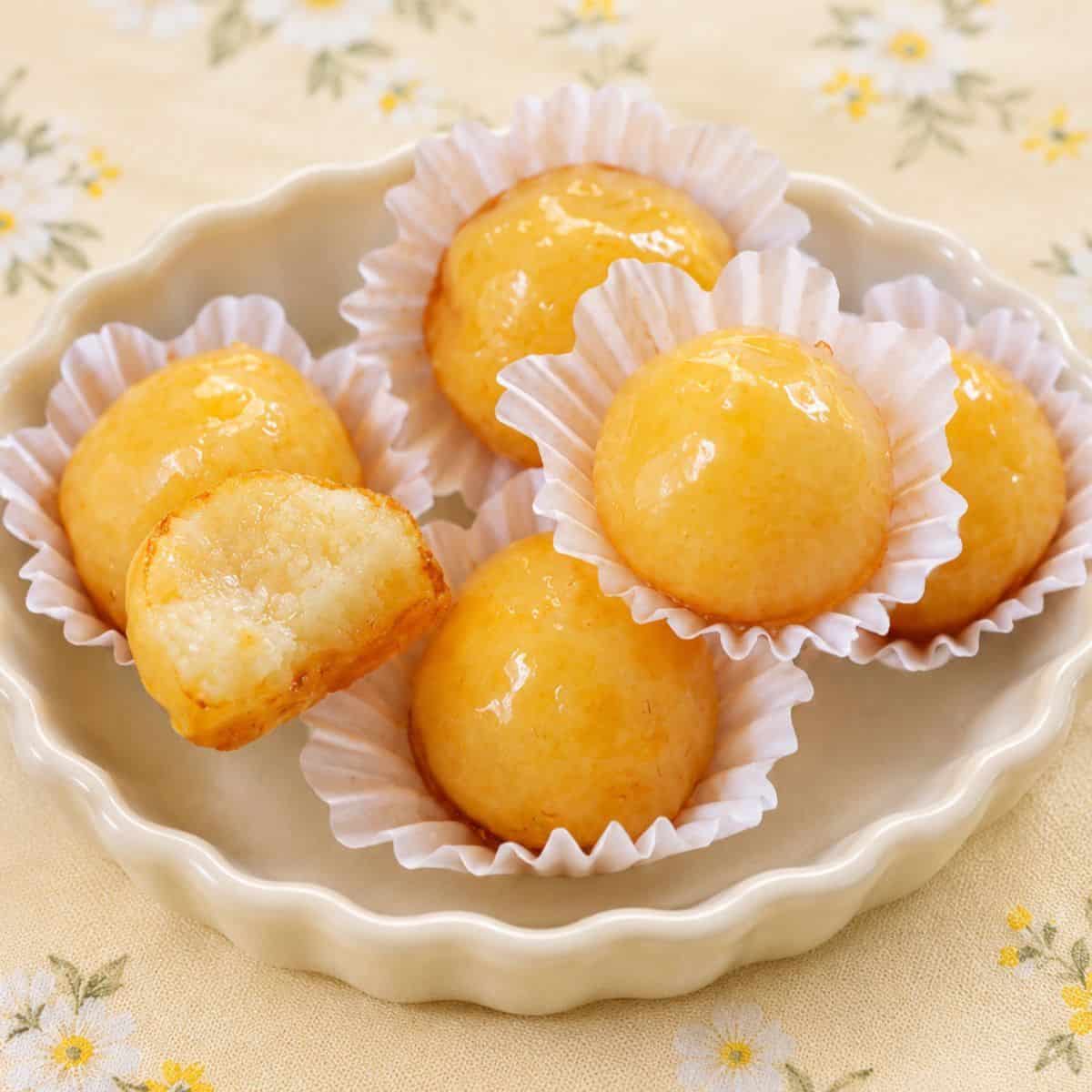
Bite-sized Brazilian Coconut Bon Bons (Bala Baiana) pair a chewy coconut and condensed milk center with a crisp, glass-like caramel shell for a sweet treat with irresistible crunch.
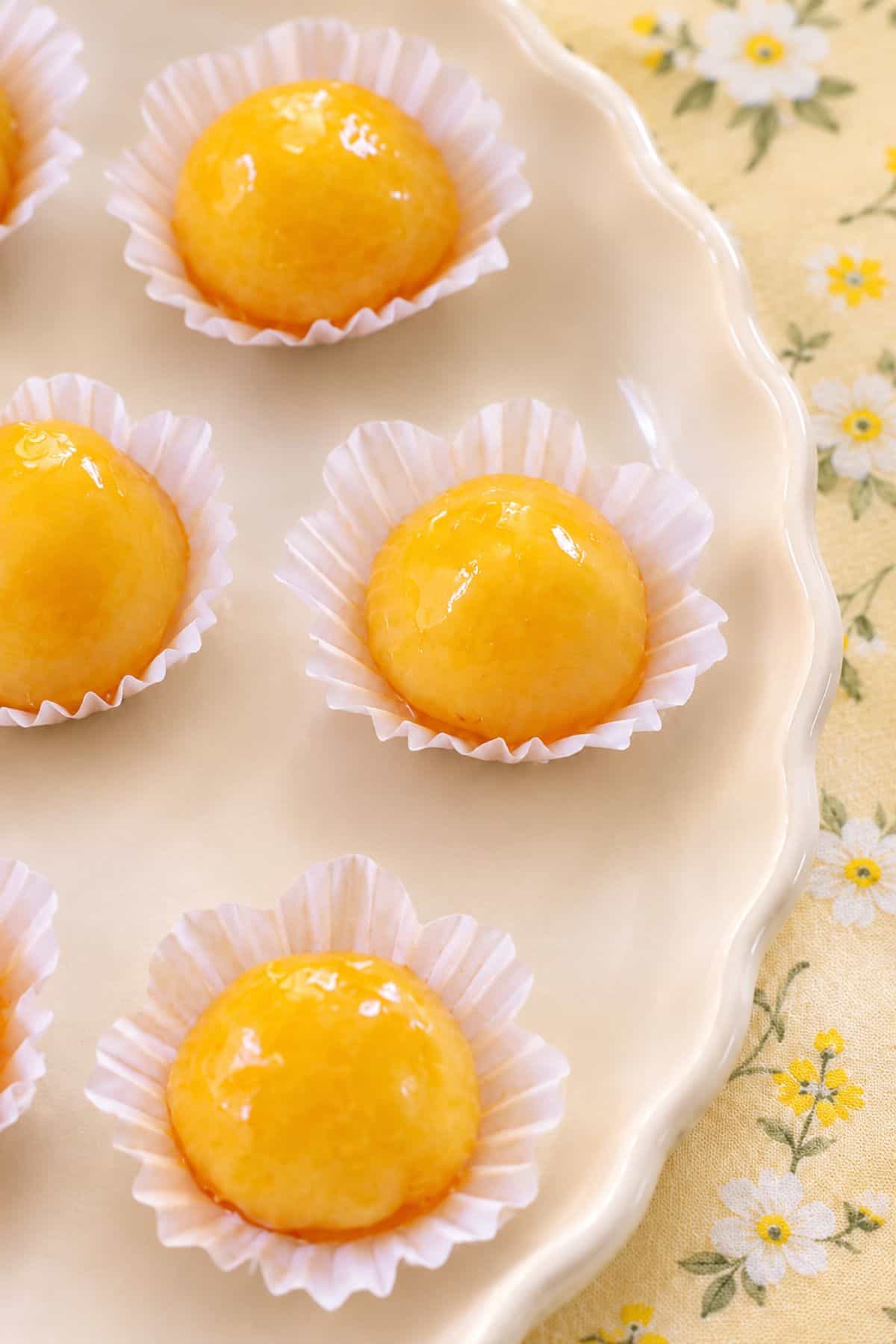
Brazilian Coconut Bon Bons, also called Bala Baiana or Bala de Vidro, have a chewy coconut and condensed milk center with a crunchy caramel shell. Instead of the chocolate coating found on many coconut bonbons, this Brazilian candy uses hard caramel for that glass-like crunch. You only need seven ingredients, and the finished candies look beautiful with their shiny golden shells. If you love coconut sweets, try my Coconut Kisses (Beijinhos de Coco), Brigadeiros, or Brazilian Coconut Bars.
Quick Look: Coconut Bon Bons
- ⏱️ Prep Time: 35 minutes
- 🔥 Cook Time: 17 minutes
- ⏲️ Total Time: 52 minutes (plus cooling)
- 🍬 Servings: 35 candies
- 🥥 Filling: Sweetened condensed milk, butter, vanilla, and coconut flakes
- 🍯 Coating: Hard caramel made with sugar, water, and vinegar
- ✨ Texture: Chewy, fudgy coconut center with a crisp, glass-like caramel shell
- 🍮 Flavor: Sweet coconut, vanilla, and caramel
- 🥄 Cooking Method: Stovetop cooking and caramel dipping
- 🎁 Best For: Weddings, birthdays, baby showers, and edible gifts
- ⭐ Difficulty: Intermediate
- Why This Recipe Works: Cooking the caramel to the hard-crack stage at 300–310°F gives the bonbons their crisp, glass-like shell. A little vinegar helps prevent sugar crystallization for a smooth coating.
SUMMARIZE & SAVE THIS CONTENT ON
Jump to:
- Quick Look: Coconut Bon Bons
- What Is Bala Baiana?
- Chef's Notes from Valentina
- Ingredients
- Substitutions And Additions
- How to Make Coconut Bon Bons
- Expert Tips for Making Coconut Bon Bons
- FAQ About Coconut Bon Bons
- What to Serve With Caramel Coconut Bon Bons
- More Homemade Candy Recipes
- Coconut Bon Bons (Bala de Vidro)
- Storage and Make-Ahead
What Is Bala Baiana?
Bala Baiana is a traditional Brazilian coconut candy made with coconut kisses, or beijinhos de coco, covered in a thin, crunchy caramel shell. Its name means Bahian candy, although its exact origins remain uncertain. The sweet also has roots in Portuguese confectionery.
In Brazil, it's also known as bala de vidro, meaning glass candy, because of its shiny, brittle coating. Another name is bala de ovo, or egg candy, which comes from older Portuguese sweets made with egg yolks. The modern Brazilian version commonly uses sweetened condensed milk instead.
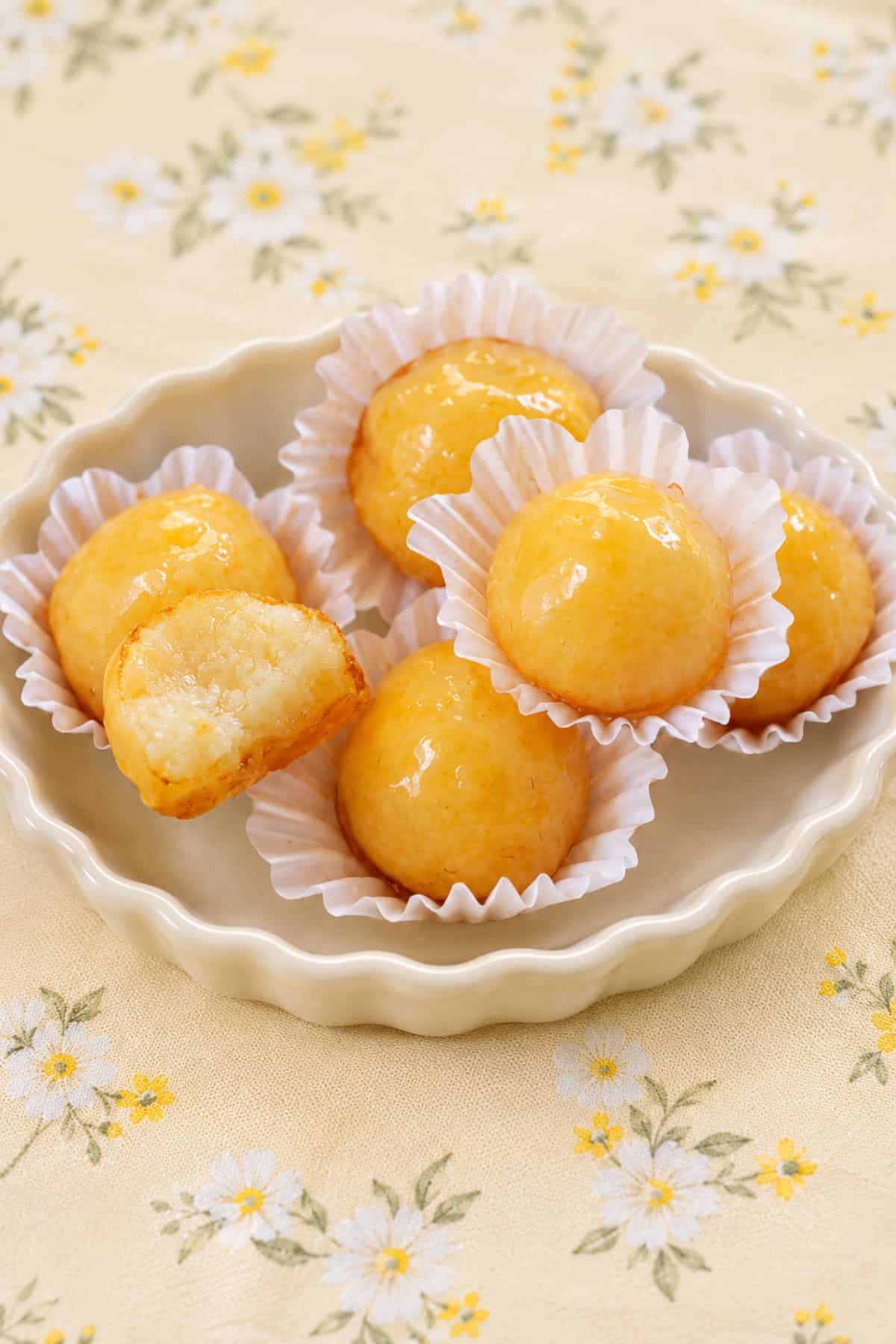
The filling resembles a coconut brigadeiro. Instead of rolling the balls in shredded coconut, they're dipped in hot caramel, which hardens as it cools. The shell cracks when bitten and reveals the soft, chewy coconut center.
These candies are popular at weddings, birthdays, and baby showers throughout Brazil. Street vendors also sell them wrapped in cellophane, and they make lovely edible gifts for Easter, Christmas, and other celebrations.
Brazilian vs. American Coconut Bon Bons
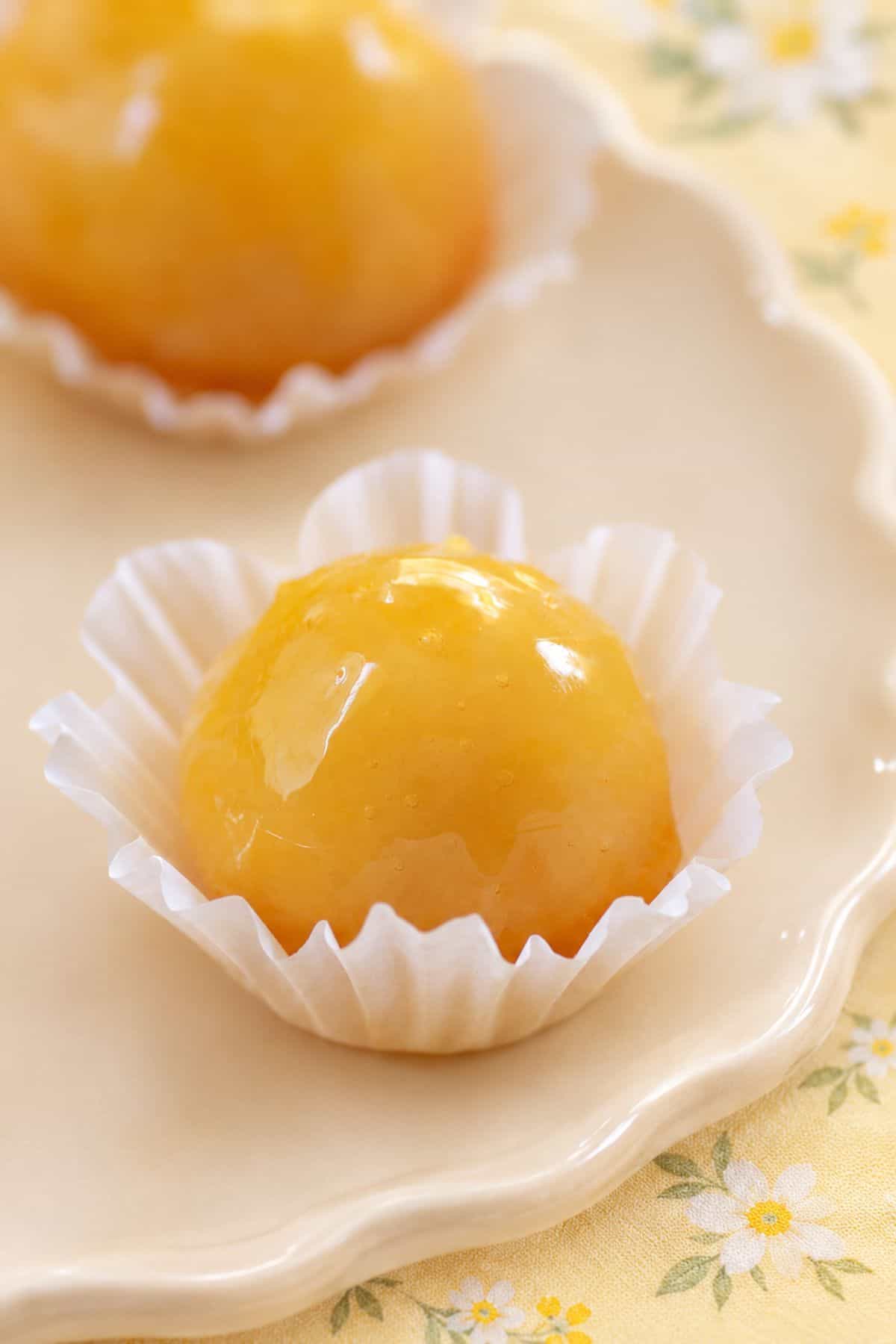
American coconut bonbons are often covered in chocolate, but Brazilian coconut bon bons have a thin, glass-like caramel shell that cracks when you bite into it. The coconut filling tastes similar, but the crunchy caramel coating gives Bala Baiana a different texture.
Ingredients
- Sweetened coconut flakes – 2 cups. Give the bonbons their coconut flavor and chewy texture. I recommend finely shredded coconut for a smoother filling that's easier to roll into balls.
- Sweetened condensed milk – 1 can (14 oz). Makes the coconut filling rich, creamy, and fudgy once cooked. Be sure to use sweetened condensed milk, not evaporated milk, because they behave differently.
- Granulated sugar – 3 cups. Cooks into a golden caramel that hardens into the thin, crunchy shell. Stick with regular white sugar for the best results.
- Unsalted butter – 1 tablespoon, at room temperature. Adds richness to the coconut filling and helps give it a smooth texture without making it greasy.
- Pure vanilla extract – 1 teaspoon. Brings out the sweetness of the coconut and gives the filling a more rounded flavor.
- White vinegar – 1 tablespoon. Helps prevent the sugar from crystallizing as the caramel cooks. Apple cider vinegar works here, too.
- Water – 1 ¼ cups. Helps the sugar dissolve evenly before the caramel reaches the hard-crack stage. Most of it cooks off as the syrup heats.
How to Make Coconut Bon Bons
Make the Coconut Filling
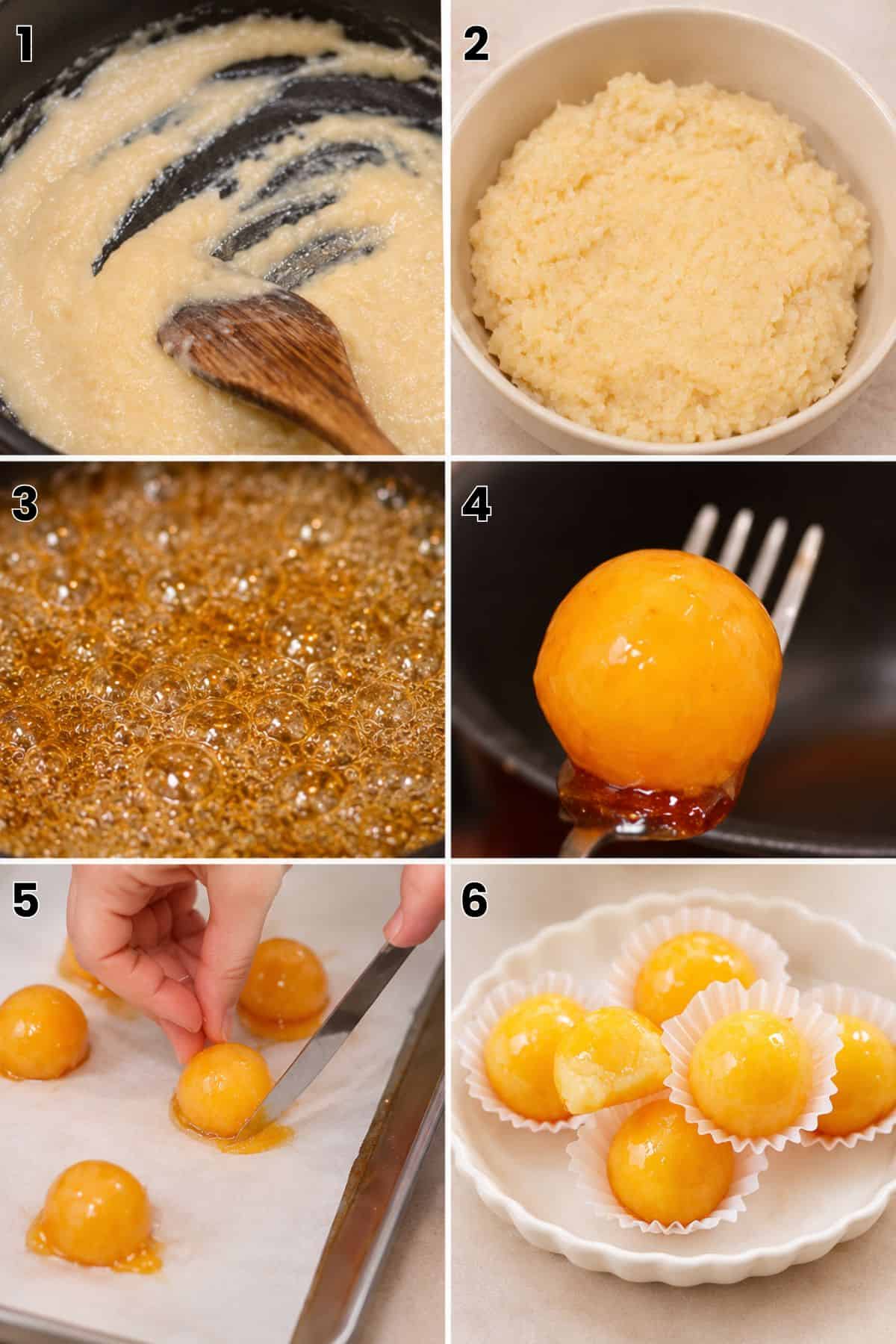
- Make the coconut kisses: In a medium nonstick pan, combine the sweetened condensed milk and butter. Cook over medium-low heat on a large burner or medium heat on a small burner, stirring constantly until the mixture reduces, thickens, and begins to darken slightly. When stirred, the bottom of the pan should remain visible for a few seconds before the mixture levels out again. PIC. 1
- Add the coconut: Remove the pan from the heat and stir in the vanilla extract and coconut flakes until thoroughly combined.
- Cool the filling: Spread the coconut mixture onto a greased plate and let it cool to room temperature before shaping. PIC. 2
- Shape the coconut balls: Lightly grease your hands to prevent sticking. Use ½ tablespoon of filling for each candy and roll it into a ball.
Make the Caramel and Coat the Bonbons
- Prepare the hard caramel: In another medium nonstick pan, combine the granulated sugar, water, and vinegar until well mixed.
- Cook the sugar syrup: Place the pan over medium heat and cook without stirring until the sugar dissolves completely. Avoid stirring the boiling syrup because it can encourage crystallization.
- Watch the caramel: Continue cooking until the syrup turns a light golden or honey color. Don't let it become too dark, or the caramel may taste bitter.
- Check the temperature: Beginning 5–7 minutes after the syrup starts boiling, watch the pan closely to prevent the caramel from darkening too quickly or burning. Continue cooking until it reaches the hard-crack stage at 300–310°F (149–154°C) on a candy thermometer. PIC. 3
Note: To test the caramel without a thermometer, drop a spoonful into a bowl of cold water and let it cool. It should harden like glass, break easily, and have very little elasticity. The syrup remains fluid enough to coat the candies when hot but hardens as it cools to room temperature. - Dip the coconut balls: Insert a long wooden skewer or toothpick into each coconut ball. Reduce the heat to low and carefully tilt the pan with one hand to make dipping easier.
- Coat the candies: Quickly and carefully dip each coconut ball into the hot caramel. Lift it out and let the excess syrup drip back into the pan. PIC. 4
Note: Hot caramel can cause serious burns. Keep your hands away from the syrup and use the skewers or toothpicks to handle the candies. - Let the caramel harden: Transfer the coated candies to a baking sheet lined with heat-safe parchment paper. Remove the toothpicks and let the caramel cool and harden completely.
- Trim the excess caramel: Use a sharp knife to carefully trim any hardened caramel around the bottom edge of each bonbon. Hold the candy gently by its sides to avoid cracking the caramel shell. PIC. 5
- Wrap or serve: Place each candy in a bonbon paper mold or wrap it individually in cellophane. Twist the ends to secure the wrapper. PIC. 6
FAQ About Coconut Bon Bons
Yes, finely shredded unsweetened coconut works well. The filling will be less sweet, but the condensed milk still gives it a rich taste and helps hold the coconut balls together.
Use it to coat other small truffles or candy balls, or drizzle it over crème brûlée in place of the usual caramelized sugar topping.
Try brigadeiro, thick dulce de leche, or guava paste for a different flavor. Just make sure the filling is firm enough to roll into balls and won't fall apart when dipped in hot caramel.
What to Serve With Caramel Coconut Bon Bons
- Coffee: Serve Brazilian coconut bon bons with espresso or freshly brewed black coffee. The slightly bitter coffee pairs well with the sweet coconut filling and crunchy caramel shell.
- Tea: Try unsweetened black or green tea to cut through the sweetness, especially when enjoying these candies as an afternoon treat.
- Brazilian Desserts: Arrange the bonbons alongside my Brazilian Carrot Cake, Passion Fruit Cake, or Guava Lemon Mousse for a mix of rich, fruity, and refreshing flavors.
- Savory Snacks: Pair them with Brazilian Cheese Bread, Coxinha, or Brazilian Rissoles for a sweet-and-savory spread.


Did You Love This Recipe? If you make this recipe and love it, stop back, give it a 5-star rating ★★★★★ and leave a comment.
Coconut Bon Bons (Bala de Vidro)
Equipment
- 2 Pans
- 2 wodden spoons
- stovetop
- 1 baking sheet
Ingredients
- 1 14 oz can sweetened condensed milk
- 1 tablespoon unsalted butter – at room temperature
- 1 teaspoon pure vanilla extract
- 2 cups sweetened coconut flakes
- 3 cups granulated sugar
- 1 ¼ cups water
- 1 tablespoon white vinegar or apple cider vinegar
Instructions
Make the Coconut Filling
- Make the coconut kisses: In a medium nonstick pan, combine the sweetened condensed milk and butter. Cook over medium-low heat on a large burner or medium heat on a small burner, stirring constantly until the mixture reduces, thickens, and begins to darken slightly. When stirred, the bottom of the pan should remain visible for a few seconds before the mixture levels out again.
- Add the coconut: Remove the pan from the heat and stir in the vanilla extract and coconut flakes until thoroughly combined.
- Cool the filling: Spread the coconut mixture onto a greased plate and let it cool to room temperature before shaping.
- Shape the coconut balls: Lightly grease your hands to prevent sticking. Use ½ tablespoon of filling for each candy and roll it into a ball.
Make the Caramel and Coat the Bonbons
- Prepare the hard caramel: In another medium nonstick pan, combine the granulated sugar, water, and vinegar until well mixed.
- Cook the sugar syrup: Place the pan over medium heat and cook without stirring until the sugar dissolves completely. Avoid stirring the boiling syrup because it can encourage crystallization.
- Watch the caramel: Continue cooking until the syrup turns a light golden or honey color. Don't let it become too dark, or the caramel may taste bitter.
- Check the temperature: Beginning 5–7 minutes after the syrup starts boiling, watch the pan closely to prevent the caramel from darkening too quickly or burning. Continue cooking until it reaches the hard-crack stage at 300–310°F (149–154°C) on a candy thermometer.Note: To test the caramel without a thermometer, drop a spoonful into a bowl of cold water and let it cool. It should harden like glass, break easily, and have very little elasticity. The syrup remains fluid enough to coat the candies when hot but hardens as it cools to room temperature.
- Dip the coconut balls: Insert a long wooden skewer or toothpick into each coconut ball. Reduce the heat to low and carefully tilt the pan with one hand to make dipping easier.
- Coat the candies: Quickly and carefully dip each coconut ball into the hot caramel. Lift it out and let the excess syrup drip back into the pan.Note: Hot caramel can cause serious burns. Keep your hands away from the syrup and use the skewers or toothpicks to handle the candies.
- Let the caramel harden: Transfer the coated candies to a baking sheet lined with heat-safe parchment paper. Remove the toothpicks and let the caramel cool and harden completely.
- Trim the excess caramel: Use a sharp knife to carefully trim any hardened caramel around the bottom edge of each bonbon. Hold the candy gently by its sides to avoid cracking the caramel shell.
- Wrap or serve: Place each candy in a bonbon paper mold or wrap it individually in cellophane. Twist the ends to secure the wrapper.
Recipe Notes
Storage and Make-Ahead
Make Ahead: Prepare the coconut filling a day in advance and refrigerate it in a covered container. Shape and dip the candies in freshly cooked caramel closer to serving time for the best texture. Refrigerate: Keep coconut bon bons in an airtight container in the refrigerator for up to 3–4 days. Separate layers with parchment paper to prevent sticking. The caramel may soften or become sticky from moisture. Freezer: Avoid freezing the finished candies. Condensation during thawing can soften the caramel shell and affect its crunch.Nutrition
** Nutrition labels on easyanddelish.com are for educational purposes only. This info is provided as a courtesy and is only an estimate, since the nutrition content of recipes can vary based on ingredient brand or source, portion sizes, recipe changes/variations, and other factors. We suggest making your own calculations using your preferred calculator, based on which ingredients you use, or consulting with a registered dietitian to determine nutritional values more precisely.
Please note that health-focused and diet information provided on easyanddelish.com is for educational purposes and does not constitute medical advice, nor is it intended to diagnose, treat, cure, or prevent disease. Consult with your doctor or other qualified health professional prior to initiating any significant change in your diet or exercise regimen, or for any other issue necessitating medical advice.
Did you make this recipe?
Comment and rate the recipe. Also follow us on Pinterest at @easyanddelish for more delish recipes.Post first published on March 30th, 2015

These bonbons are so inviting! Printed to make, definitely!
I wish you have Merry Christmas, dear!
My candies stuck to my wax paper I feel like they are ruined. How did you prevent this?
Hi Moriah! Mine didn't get stuck on the parchment paper because the climate where I live in hot yet dry and the caramel shell solidified quite fast while I was still holding them on the fork. To prevent getting the coconut bon bons stuck on parchment paper, you may either lightly grease the parchment paper with butter, or place them on a cookie rack.
Wax paper melts when in contact with anything hot. Just try parchment next time or cold plate. Doesnt have to be cold but you get the idea I hope.
Thank you for pointing this out! You’re right that parchment paper is a better choice for direct contact with the hot candy mixture, since the coating on wax paper can soften or melt from the heat. A lightly greased heat-safe plate works well too. I appreciate you catching that and sharing the tip!
I made them for Easter and these coconut bon bons were a big hit. We loved the contrasting flavors of the fudgy balls with the crackly caramel shells.
I placed some of mine on a wire rack and spooned the glaze over it. Worked pretty good. I’m afraid I’m overcooking the Carmel. I turned the burner down and started glazing when the candy thermometer read 350, but the color was not as golden as I thought it should be and it was quite brittle.
Hi, Linda! Yes, you are overcooking the caramel. it must reach between 300 to 310 degrees F, not 350 F. The recipe says: "Cook over medium heat, without stirring (to prevent the caramel from forming crystals), until the sugar dissolves completely.
The caramel will cquire a light caramel/golden honey color (do not let the caramel darken, otherwise the caramel may become bitter).
Beginning 5-7 minutes from when mixture first starts to boil, watch the pan constantly in order to avoid caramel quickly turning dark or even burning.
The caramel syrup has to reach the hard-crack stage (300°F to 310° F)".
Would it be okay to quickly dip newly shelled bons into an ice water bath to set the shell, that way there will be no run off or trimming to do?
Hi Paula! I have never tried to do that! You may test it by dipping only one of the bon bons into an ice water bath and see whether it works. I would love to find out how it turned out!
The filling was delish but the caramel candy coating took near an hour to caramelize. Are you sure it is 1 & 1/4 cups water and not just 1/4 cup?
Hi Dawna! Yes, I am very sure about all the meaasurements and time that took me to get the caramel ready. Of course, stoves, as oven, can vary temperature/potency. Other people here in the comments and also on Pinterest left comments saying they made the recipe successfully. Sorry that it took you so long but the issue is neither measurement nor the recipe itself. Another thing is, depending on where you live, cold temperature (environmental) can make the caramel cook longer. I have never made these in the wintertime. It has always been in the Spring time.
You’re not alone, I live in a hot climate and it still took me over an hour to get the sugar where I wanted it. I’m not sure why.
These are so sweet . Very rich . I wonder if there is anything to cut the condensed milk with to lessen the richness .i made them but my flakes to big . I’m going to grind them up and make new batch . They are very sweet. One bon bon is enough lol
Hi Erica! You can replace the sweetened condensed milk with sweetened COCONUT condensed milk to make them less sweet.
I just made a batch with coconut condensed milk and it was just as good!!
Thank you so much for letting me know you replaced sweetened condensed milk with coconut condensed milk and worked well in this coconut bon bons recipe.
Is there anything you can make with the leftover candy shell mix? Pour mix on cookie sheet and add nuts for brittle? I just don't want to throw away
Hi Jeanette! The caramel in this recipe is not as soft as in a brittle or turtle recipe. But you can try it! I think if you had any type of truffle, or sweet soft ball and coat them with the caramel would go well. Or, I would top some creme brulee with it instead of burnt sugar.
I made this and wasn't sure if I looked my Caramel long enough. It was the right temp and the result is a hard shell but it's not golden like your pictures. It also sticks to the teeth like craaazy. It does t quite shatter like I've seen in videos. Just wondering if that's normal or I did something off . =)
Hi Lissa! Definitely something is wrong. The caramel shell is supposed to be hard and shaterring, not sticky to the teeth. Mine was definitively golden. To achieve that I used a candy thermometer that measures the temperature correctly and then tested the caramel on a surface. If yours was sticky is because it didn't cooked enough.
These are fabulous ... But it takes much longer for my candy shell to reach 300 plus degrees ... It takes mine about 25 minutes. Should I increase the heat to med high?
Me again, I wanted to add , I use a new toothpick for each one to dip with. Thank you so much for this recipe!!!
Turned out delicious; however it took a little longer than posted and I would not recommend putting them on wax paper. They totally stuck and it wasn’t easy trying to get the paper off. Next time, I’ll try a silpat mat maybe?
After the caramel shell completely cool, mine did not stick to the wax paper. In fact, this is the way we buy them from street food vendors in Brazil, individually wrapped in wax paper like candy. But you can certainly use a silpat mat to make them rest while the caramel shell solidifies completely. But if we serve them at parties, we use bonbon paper cups. Depending on the temperature in the place you live, it may take longer to cool and dry. Humid environments make the caramel dry slower and become sticky. Cold weather makes them cool faster. I live in Texas which is hot and often dry at the summertime. It takes longer for them to fully cool but they don't become sticky because the air is mostly dry. Also, if you cook the caramel to the correct temperature, this will help the shell to get crunchy but not sticky.
I use parchment paper ... Works great!! Have a great day!
I made them Tonite. They were not as pretty as yours, but I believe next time with practice they will look better. We loved them, but they were extremely sweet. Do you think I could use unsweetened coconut ? Thanks for the review!!
Hi Paula! Thank you for your feedback. Yes, you can use unsweetened coconut flakes for sure. The condensed milk, coconut, and hard caramel shell make them quite sweet. This is why they are small like truffles. It is a treat to eat once or twice or once per day. 🙂 And don't worry! With practice, you can make them beautiful. Have a great week!
Wow this looks amazing! Looks like our yema in the Philippines
https://www.angsarap.net/2012/01/10/yema/
These are gorgeous, although I've never heard of them before. Will have to bookmark to try at a later date. 🙂 Much later date, still shaking from my overdose on sugar and sweet foods this weekend. Lol! Your cake really was a huge success with the family. Thank you!
Thank you, Anna! I was so happy that you made those bars.
I hope you and your family had a great weekend. xx
The outer shell was so hard/sticky we couldn’t eat them. It stuck to our teeth so bad..worse than a candy apple. Maybe we did something wrong.
Hi Yvonne: So sorry to hear it wasn't perfect the first time around. We have definitely all been there! To get that ideal shattering caramel shell instead of a sticky one, temperature is everything. I always use a precise candy thermometer and do a surface test to get that perfect golden color. Sticky caramel just means it was undercooked.
The balls look so shiny and perfect in and out! Drools **
Julie & Alesah
Gourmet Getaways xx
We have something similar, not made with coconut, but the shape is the same, covered with the caramel...we call it "yemitas" (little egg yoks).
How interesting, Nydia!!! I would love to see yemitas in your blog and try the recipe. Happy Easter!
I love anything made with sweetened condensed milk - love these cute little treats! Happy Easter!
Wow, fantastic recipe Denise! The inside is pretty much the same technique you showed us in the brigadeiros recipe, so we think we have mastered it:)
The tricky part is the caramel coating! Won't the caramel stick on the parchment?:/ Is this a stupid thought?:)
We haven't experimented with caramel that much as you can see:)
Here in Greece we lot caramelized choux, filled with cream. It's one of those treats we grew up with (practically there was no birthday, anniversary or any other occasion without it in the 80s).
So, since we adore those, we know that the coconut twist will simply be heaven in each bite!:)
Thanx so much dear,
have a beautiful Easter!
Panos and Mirella
xoxoxoxoxo
Hi, Panos and Mirella!
Actually, the parchment paper will help to avoid hardened caramel to stick to the baking sheet.
I would love to see your caramelized choux filled with cream in your blog and read about your childhood memories eating it while growing up.
Thank you so much for stopping by despite of your busy schedule. Wishing you both a very Happy Easter! xoxo
I am a big fan of Brazilian food ever since I started reading your blog. And you come up with amazing stuff every time. I have never come across these before but these are gorgeous! I want all of them. The caramel coating technique is mindblowing!
Denise, I made these today and they were a big hit at home. I doubled the recipe and it went without a hitch. The only thing was that when rolling them I wet my hands as opposed to using fat in my hands. At first I tried canola oil --a tiny bit in my palms but it got a bit messy so when I rinsed my hands it occurred to me to use my damp hands, what can I tell you? It went so fast and smoothly I could not believe it. Anyway, thanks for the recipe --I am sure I will make them over and over again.
Flor de Maria:
I am so glad to know that you made them and ,even more, they were a big hit.
For my coconut balls, I did not use anything in my hands to roll them -- neither greased or wet hands and I could roll them without any problem since the recipe is saturated with coconut flakes. But I am glad to know that wetting your hands helped you to roll them easily. If this worked for you, go ahead!!! Enjoy these and other types of brigadeiros... Wishing you and your family a very Happy Easter! And thanks a lot for stopping by to let me know that everything turned all right. I do appreciated it.
The glass bonbons look lovely, Denise and the pic where the sugar is caramelizing is sensational.
A great treat for this season.
Happy Easter !
Denise these are absolutely GORGEOUS!!! I am blown away!
These are new to me! Love the way they look -- and they do kind of remind me of an egg yolk! Super dish -- thanks.
This are so pretty Denise...I remember having these bonbons back in Brazil, but never thought in making them myself...thanks for the recipe...
Have a wonderful week 🙂
My pleasure, Juliana! They are much easier to make them it looks... 🙂
Have a Happy Easter!
Oh Denise these look so so delicious! ah making me drool 🙂
These look wonderful, I will, for sure, give them a try. Thanks!
Let me ask you...should the caramel be a soft roll temperature? I think the major difficulty would be with the caramel so using a thermometer would be ideal--until you get enough experience to be able to "eyeball" it and know.
Hi, Flor de Maria! Thanks for stopping by. I hope you try these and enjoy them as much as my family and I did.
I didn't test this recipe with a thermometer. Sorry!
I made them for the first time and was relatively easy. When caramel mixture is bubbly and ,above all, gets a light caramel/golden honey color (main clue), it is ready to bath the coconut balls in. Caramel temp is about: 160-177ºC or 320-350ºF. Please, take a look at this article which explains the caramel test better: https://www.wikihow.com/Test-Candy-Hardness-Stages
I hope this helps. Wishing you and your family a very Happy Easter!!!
OMG! Delicious, as always! I'm sooooo gonna give this recipe a try!
The sunshine yellow photos have my undivided attention! The Glass Bonbons just scream spring!
Bon bons are such a wonderful name for these. Love the idea of a crunchy glass shell. What a special treat!