

Golden and crisp, Rabanadas are Brazilian French toast made with stale baguette soaked in sweetened vanilla milk, dipped in beaten eggs, deep-fried, and coated in cinnamon sugar.
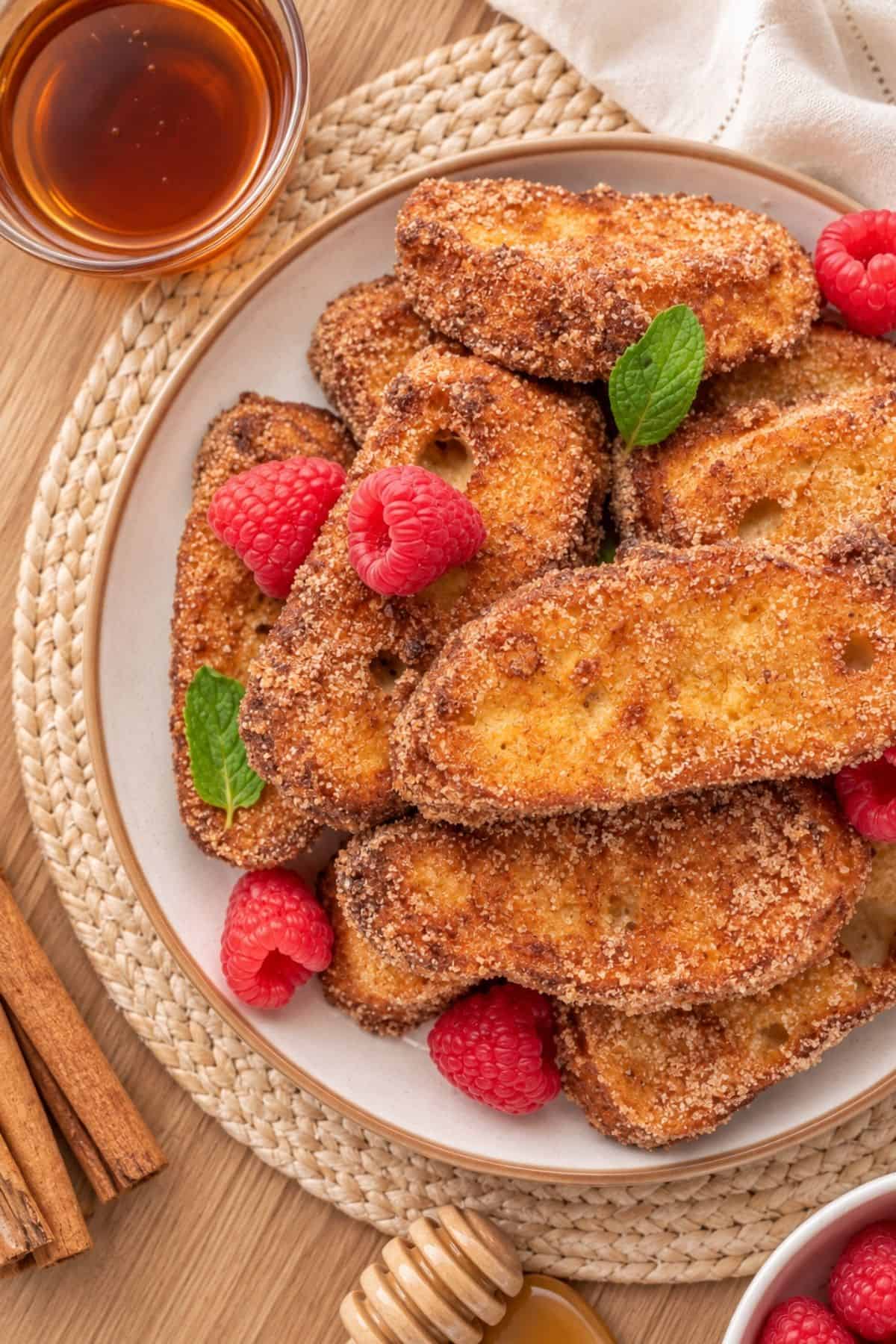
With roots in Portuguese cuisine, rabanadas have become a favorite sweet treat in Brazil, especially at Christmas. Their soft, custardy center and lightly crisp crust make them delicious warm or at room temperature, served with coffee or a drizzle of honey. If you enjoy traditional sweets, try my Panettone French Toast, Brigadeiros, or French Toast (2 Ways).
Quick Look: Rabanadas
- ⏱️ Prep Time: 8 minutes
- 🕒 Soaking Time: 20 minutes
- 🔥 Cook Time: 2 minutes per batch
- ⏲️ Total Time: 30 minutes
- 🍽️ Servings: 24 slices
- 🍬 Flavor Profile: Sweet, with vanilla and cinnamon
- 🍞 Texture: Soft and custardy inside, with a golden, lightly crisp crust
- 👌 Difficulty: Easy
- 🎄 Best For: Christmas desserts, afternoon snacks, and holiday gatherings
- 🍳 Cooking Method: Deep-frying in a skillet, with an optional oven method
- 🥖 Key Ingredients: Stale French baguette, whole milk, eggs, sugar, vanilla, cinnamon, and vegetable oil
- Why This Recipe Works: Stale baguette holds together well during soaking. It absorbs the sweetened vanilla milk and becomes soft and custardy inside. Dipping the slices in beaten eggs before frying helps them turn golden and lightly crisp.
SUMMARIZE & SAVE THIS CONTENT ON
Jump to:
- Quick Look: Rabanadas
- What Is Rabanada?
- Rabanada vs. French Toast
- Chef's Notes from Valentina
- Ingredients
- Substitutions And Additions
- How to Make Rabanadas
- Expert Tips for Rabanadas
- FAQ About Rabanadas
- What to Serve with Rabanadas
- More Brazilian and Holiday Desserts
- Rabanadas (Brazilian French Toast)
- Storage and Reheating
What Is Rabanada?
Rabanada is a traditional fried bread dessert popular in Brazil and Portugal. The plural is rabanadas, and you may know the dish as Brazilian or Portuguese French toast. It's especially popular at Christmas, but it's also enjoyed as a dessert or afternoon snack.
Rabanadas became part of Brazilian cooking through Portuguese culinary influence, although similar bread dishes have existed across Europe for centuries. In Portugal, they're also known as fatias douradas, which means golden slices, or fatias de parida, an older name traditionally associated with serving the dish to women after childbirth.
Every family has its own version. Brazilian rabanadas often use sweetened milk, sometimes flavored with vanilla or made with condensed milk, and are finished with cinnamon sugar. Portuguese recipes may flavor the milk with cinnamon and lemon peel, and some are served with wine-based syrup. Both are delicious ways to use stale bread.
Rabanada vs. French Toast
Rabanada and American French toast share many of the same ingredients, but there are a few differences in how they're prepared and served.
- Bread: Rabanadas usually use thick slices of stale French bread or baguette. American French toast can use sandwich bread, brioche, or challah.
- Soaking: Rabanadas are often soaked in sweetened milk first, then dipped in beaten eggs. American French toast usually combines the milk and eggs in one mixture.
- Cooking: Traditional rabanadas are deep-fried in oil. American French toast is typically cooked in a skillet with butter or a little oil.
- Finishing: Rabanadas are coated in cinnamon sugar after frying. American French toast is commonly served with butter, maple syrup, or fruit.
- Serving: In Brazil, rabanadas are especially popular as a Christmas dessert or afternoon snack. American French toast is more commonly enjoyed for breakfast or brunch.
The biggest difference is how they're prepared. Rabanadas are soaked in sweetened milk, dipped in eggs, and finished with cinnamon sugar after frying. They're especially popular at Christmas in Brazil, where they're often enjoyed as a dessert or afternoon snack.
Ingredients
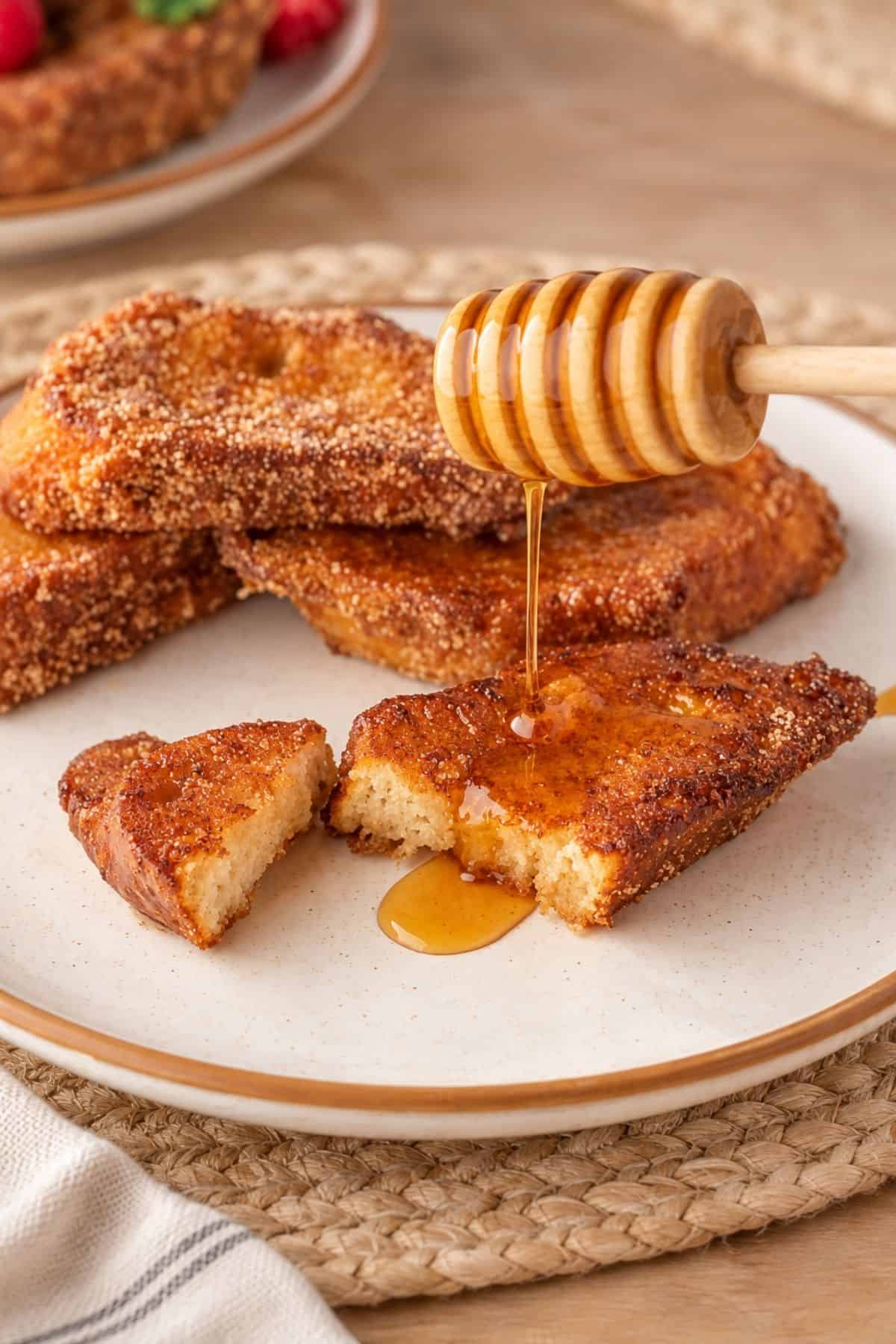
- Stale French baguette – 24 slices, ¾-inch thick, about 1 ½ baguettes. Day-old bread holds together better during soaking and becomes soft and custardy inside after frying.
- Whole milk – 2 cups. Whole milk gives the bread a creamy, rich center without making it too heavy. Half-and-half works too if you prefer a richer result.
- Large eggs – 4, lightly beaten. Dipping the soaked bread in eggs helps each slice turn golden and lightly crisp when fried.
- Granulated sugar – ½ to ¾ cup for the milk mixture, plus ½ cup for coating. Adjust the sweetness of the milk to your taste. The cinnamon-sugar coating gives each slice a sweet, slightly crunchy finish.
- Ground cinnamon – 1 tablespoon. Its sweet, slightly earthy flavor pairs well with the vanilla and fried bread.
- Pure vanilla extract – 1 tablespoon. Gives the milk a sweet, fragrant flavor that complements the cinnamon-sugar coating.
How to Make Rabanadas
Traditional Deep-Fried Rabanadas
- Prepare the baking sheet and bread: Line a large baking sheet with a double layer of paper towels and set aside. Arrange the 24 slices of stale French baguette in a single layer across two large, shallow baking dishes.
Note: If your baguette is fresh, bake the slices at 375°F (190°C) for about 10 minutes and let them cool before soaking. Slightly dried bread holds together better and is less likely to turn mushy. - Mix the sweetened milk: In a pitcher or large bowl, stir together 2 cups of whole milk, 1 tablespoon of pure vanilla extract, and ½ to ¾ cup of granulated sugar until well combined.
- Soak the bread: Pour the milk mixture evenly over the bread slices. Let them soak for about 20 minutes, until they've absorbed as much of the sweetened milk as possible.
- Dip in beaten eggs: Lightly beat the 4 large eggs in a shallow bowl until evenly mixed. Gently lift each soaked bread slice and dip both sides in the eggs. Let any excess drip back into the bowl.
- Heat the oil: Pour about 2 inches of vegetable oil into a large, heavy skillet. Heat over medium-high until the oil is hot enough to sizzle when the bread is added.
- Fry the first side: Carefully place several coated slices into the hot oil, leaving enough space between them. Fry for about 1 to 1 ½ minutes, until well browned on the first side.
- Flip and finish frying: Turn each slice and fry until the second side is golden brown. Transfer the rabanadas to the paper towel-lined baking sheet. Continue frying the remaining slices in batches.
Note: The oil may get hotter during successive batches. Reduce the heat or shorten the frying time as needed to prevent overbrowning. Leave enough room in the skillet to turn each slice easily. - Coat with cinnamon sugar: Mix ½ cup of granulated sugar with 1 tablespoon of ground cinnamon in a medium bowl. Remove any excess cooked egg threads from the fried bread if needed, then coat all sides of each slice in the cinnamon-sugar mixture.
- Serve: Enjoy the rabanadas warm or at room temperature, plain or with a drizzle of honey or maple syrup. Fresh berries are another optional accompaniment.
Rabanadas in the Oven
- Prepare the baking sheet and bread: Preheat the oven to 350°F (180°C) and line a large baking sheet with parchment paper. Arrange 24 slices of stale French baguette in shallow baking dishes.
- Mix and soak: Combine 2 cups of whole milk, 1 tablespoon of pure vanilla extract, and ½ to ¾ cup of granulated sugar. Pour evenly over the bread and let soak for about 20 minutes.
- Dip and arrange: Beat 4 large eggs in a shallow bowl. Dip both sides of each soaked slice into the eggs, let the excess drip off, and arrange on the prepared baking sheet in a single layer.
- Bake: Bake for 10–15 minutes on the first side, then flip and bake for another 10–15 minutes, until golden brown. Avoid overbaking to prevent the bread from drying out.
- Finish and serve: Mix ½ cup of granulated sugar with 1 tablespoon of ground cinnamon. Coat the warm slices on all sides and serve plain or with honey, maple syrup, or fresh berries.

FAQ About Rabanadas
Brioche, challah, and thick-cut Italian bread are good alternatives to French baguette. Choose slightly stale bread that can hold up to soaking. Brioche and challah are softer and richer, so they need less time in the milk mixture.
Yes! Try dulce de leche, chocolate sauce, whipped cream, powdered sugar, or fruit preserves. Add them just before serving, and use a lighter cinnamon-sugar coating if the toppings are particularly sweet.
Use slightly stale bread that can absorb the sweetened milk without falling apart. If the slices start getting too soft before the 20-minute soak is up, take them out early. You want a creamy center, not one that's soggy or mushy.
The oil may not have been hot enough. Keep it around 350°F (175°C) and fry only a few slices at a time. Overcrowding the skillet lowers the oil temperature and can leave the bread greasy.
What to Serve with Rabanadas
- Coffee: Freshly brewed Brazilian coffee balances the sweetness of the cinnamon-sugar coating. A small cup of strong coffee pairs especially well with warm rabanadas.
- Fresh Berries: Strawberries, raspberries, and blueberries bring a tart contrast to the sweet bread. My Tropical Fruit Salad is another refreshing option.
- Whipped Cream: A spoonful of lightly sweetened whipped cream pairs well with the cinnamon and vanilla. My Cream Cheese Fruit Dip is another option if you prefer something tangy.
- Vanilla Ice Cream: Serve warm rabanadas with a scoop of vanilla ice cream for a contrast of warm bread and cold, creamy ice cream. My Sweet Guava-and-Cream Ice Cream is a fruity alternative.
More Brazilian and Holiday Desserts



Did You Love This Recipe? If you make this recipe and love it, stop back, give it a 5-star rating ★★★★★ and leave a comment.

Rabanadas (Brazilian French Toast)
Equipment
- frying pan
- bowls
Ingredients
- 24 slices stale French baguette – ¾-inch thick (about 1 ½ baguettes)
- 2 cups whole milk
- 1 tablespoon pure vanilla extract
- ½ to ¾ cup granulated sugar
- 4 large eggs – lightly beaten until evenly mixed
- vegetable oil – for frying
- ½ cup granulated sugar
- 1 tablespoon ground cinnamon
- honey or maple syrup – optional, for serving
Instructions
Traditional Deep-Fried Rabanadas
- Prepare the baking sheet and bread: Line a large baking sheet with a double layer of paper towels and set aside. Arrange the 24 slices of stale French baguette in a single layer across two large, shallow baking dishes.Note: If your baguette is fresh, bake the slices at 375°F (190°C) for about 10 minutes and let them cool before soaking. Slightly dried bread holds together better and is less likely to turn mushy.
- Mix the sweetened milk: In a pitcher or large bowl, stir together 2 cups of whole milk, 1 tablespoon of pure vanilla extract, and ½ to ¾ cup of granulated sugar until well combined.
- Soak the bread: Pour the milk mixture evenly over the bread slices. Let them soak for about 20 minutes, until they've absorbed as much of the sweetened milk as possible.
- Dip in beaten eggs: Lightly beat the 4 large eggs in a shallow bowl until evenly mixed. Gently lift each soaked bread slice and dip both sides in the eggs. Let any excess drip back into the bowl.
- Heat the oil: Pour about 2 inches of vegetable oil into a large, heavy skillet. Heat over medium-high until the oil is hot enough to sizzle when the bread is added.
- Fry the first side: Carefully place several coated slices into the hot oil, leaving enough space between them. Fry for about 1 to 1 ½ minutes, until well browned on the first side.
- Flip and finish frying: Turn each slice and fry until the second side is golden brown. Transfer the rabanadas to the paper towel-lined baking sheet. Continue frying the remaining slices in batches.Note: The oil may get hotter during successive batches. Reduce the heat or shorten the frying time as needed to prevent overbrowning. Leave enough room in the skillet to turn each slice easily.
- Coat with cinnamon sugar: Mix ½ cup of granulated sugar with 1 tablespoon of ground cinnamon in a medium bowl. Remove any excess cooked egg threads from the fried bread if needed, then coat all sides of each slice in the cinnamon-sugar mixture.
- Serve: Enjoy the rabanadas warm or at room temperature, plain or with a drizzle of honey or maple syrup. Fresh berries are another optional accompaniment.
Rabanadas in the Oven
- Prepare the baking sheet and bread: Preheat the oven to 350°F (180°C) and line a large baking sheet with parchment paper. Arrange 24 slices of stale French baguette in shallow baking dishes.
- Mix and soak: Combine 2 cups of whole milk, 1 tablespoon of pure vanilla extract, and ½ to ¾ cup of granulated sugar. Pour evenly over the bread and let soak for about 20 minutes.
- Dip and arrange: Beat 4 large eggs in a shallow bowl. Dip both sides of each soaked slice into the eggs, let the excess drip off, and arrange on the prepared baking sheet in a single layer.
- Bake: Bake for 10–15 minutes on the first side, then flip and bake for another 10–15 minutes, until golden brown. Avoid overbaking to prevent the bread from drying out.
- Finish and serve: Mix ½ cup of granulated sugar with 1 tablespoon of ground cinnamon. Coat the warm slices on all sides and serve plain or with honey, maple syrup, or fresh berries.
Recipe Video

Recipe Notes
Storage and Reheating
Refrigerate: Keep leftover rabanadas in an airtight container in the refrigerator for up to 2 days. Place parchment paper between layers to prevent sticking. The cinnamon-sugar coating may soften over time. Freezer: Let the cooked rabanadas cool completely before freezing, without the cinnamon-sugar coating. Arrange them on a parchment-lined baking sheet and freeze until firm. Transfer to a freezer bag and store for up to 2 months. Reheating: Warm refrigerated slices in a 350°F (180°C) oven for about 6–8 minutes. Frozen slices can be reheated at the same temperature, loosely covered with foil, for about 10 minutes or until heated through. Coat with cinnamon sugar after reheating if needed. Skip the microwave to keep the bread from becoming too soft.Nutrition
** Nutrition labels on easyanddelish.com are for educational purposes only. This info is provided as a courtesy and is only an estimate, since the nutrition content of recipes can vary based on ingredient brand or source, portion sizes, recipe changes/variations, and other factors. We suggest making your own calculations using your preferred calculator, based on which ingredients you use, or consulting with a registered dietitian to determine nutritional values more precisely.
Please note that health-focused and diet information provided on easyanddelish.com is for educational purposes and does not constitute medical advice, nor is it intended to diagnose, treat, cure, or prevent disease. Consult with your doctor or other qualified health professional prior to initiating any significant change in your diet or exercise regimen, or for any other issue necessitating medical advice.
Did you make this recipe?
Comment and rate the recipe. Also follow us on Pinterest at @easyanddelish for more delish recipes.Post first published on 12/07/2015.

Delish indeed ! 🙂
To bake it, you say, follow Steps 1 - 4, but isn't it steps 1-2? I assume baking it reduces fat content. Mardi
Hi Mardi! Yes, the baking process reduces the fat content of the recipe and also decreases the number of calories.
I have just corrected the recipe and also included the baked version in the recipe card notes. I apologize for the inconvenience that it may cause you. Thank you!
Thank you, Denise. How kind of you! Mardi
My pleasure! Thank you for calling out that mistake. I really appreciate it!
This look is just...irresistible! My mouth is water!
Kitchen Utensils Review
This Brazilian French toast looks so good, I need to try this recipe!
Thank you! Rabanadas are one of the most popular Christmas desserts in Brazil.
Really, really nice. 🙂 Thanks. And happy holidays!
Thanks for the family recipe. I lived in a Rio for a couple years, 16 years ago and I've been missing rabanada. Your recipe popped right up and I look forward to trying it. Regarding the above mentioned wine modification (in Portuguese) could I just dip the milk soaked bread into a 1:1 ratio cooking red wine : water, then dunk in egg and fry? Muito obrigado!!!
Hi, Logan!!! Absolutely!! You can replace the vanilla-flavored milk for a good red or white cooking wine. Either one will give flavor to the French toast in the soaking process. Then you dunk the soaked bread in eggs and fry according to the recipe instructions. I don't recommend the use of water for the soaking process because it won't flavor the bread. I hope this helps. Enjoy!!!
What a sweet post...!:) Both due to the recipe as well as the memories! After all, why do we do this? Why blog if we can't share some memories, some experiences with others. It's what make the recipes unique to each and every one of us, right? We wish you will share this exact recipe with your grandchildren one day Denise! We know they'll cherish both the recipe and their grandma:)
Thank you for the delicious treat, the cultural context and the memories!
MERRY CHRISTMAS DENISE! May the new year bring joy, health and happiness to you and your family!
Lots of hugs from both of us!
xoxoxo
Such a wonderful recipe, Denise. My son is coming back home frome college. I will definitely surprise him on Christmas with your awesome Rabanada. There is nothing better than sharing foods and memories of grandmas. Wish you and your family a merry Christmas and a very happy new year! Xo Xo...Hadia
Hadia, thank you! I hope he enjoys as much as my family and I do. Merry Christmas and a marvelous 2016 for you and your family.
This is an amazing recipe for Christmas morning. The kids and adults would love love this.
I love the custardy toast. Pinning for sure to make it sometime.
xoxo
This sounds absolutely delicious, what a nice twist on a classic.
What an interesting recipe, I bet kids and adults will be thrilled to try this delicious toasts. I have a feeling that it will be super hard to pick up the toast pieces and dipping them in the egg... any tips on that?... Sharing this on FB this now:)
Thanks so much for sharing it, Amira!
Wow! This looks great. Love French toast, and this looks much better. Gotta try it! Thanks.
Oooh I love the fact that it's more custard-y! I always soak my french toast for a loooong time before pan-frying it so that the inside is really custard-y. I definitely have to give yours a try!
oh wow! sounds great! My Brazilian friends are gonna love it!
Fantastic Denise! I always sprinkle cinnamon on my French Toast! I can just imagine all the sweets memories you are making with your daughters!
Minha mae sempre faz rabanada na epoca do natal... ela sempre usa vinho e fica uma delicia! Um pouquinho diferente da tua receita... mergulha o pao no vinho com agua, depois na na outra mixtura. Fica uma maravilha coberto com acucar e canela!
Mas muito obrigada por postar essa outra versao q eu nao conhecia.
Feliz Natal!!!
Cristina: Que surpresa boa ver uma brasileira aqui. Com vinho deve ficar uma delícia também. A minha avô materna era de decendência portuguesa e sempre fazia a dela embebida no leite -- é muito comum em Pernambuco também. Essa minha receita é bem parecida com a dela. A única diferença é que eu misturo um pouco de açúcar e essência de baunilha com o leite para dar um gosto melhor. O pão amanhecido suga essa mistura de leite e dentro fica bem molhadinho e gostoso. A minha avô servia sem mel por cima mas aqui na minha casa adoramos das duas maneiras. Espero que você possa experimentar! Vale a pena. As minha filhas gostaram tanto que já pediram pra eu fazer de novo. Um abraço!
Well, December is the time for food, I never eat as much as I do in this time of the year. And here in the south side of the world is not the best thing to do because it's beach season 🙂
Oh, I like this, we just got a new recipe for breakfast.
Thanks, Amy! Although this a traditional Christmas dish from my home country, I made it for the first time for my 9-and-7- year-old children and they loved it. They have already requested it several times so I will be making for Christmas day again. I hope your family and you enjoy this treat. Thanks for stopping by!
Now I dig it, looks like I need to visit Brazil soon because of all of these amazing sweet dishes, you guys know how to please people with sweet tooth, just look at that beauty of a French Toast
Thanks, Raymund! Yep, we got a very sweet tooth. 🙂 Merry Christmas to you and your family!