
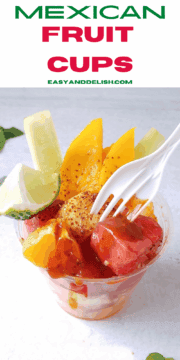
Sweet and tangy Mexican Fruit Cups pair fresh tropical fruit and crunchy cucumber with chamoy sauce, Tajín, and lime for a refreshing snack inspired by Mexican street food.
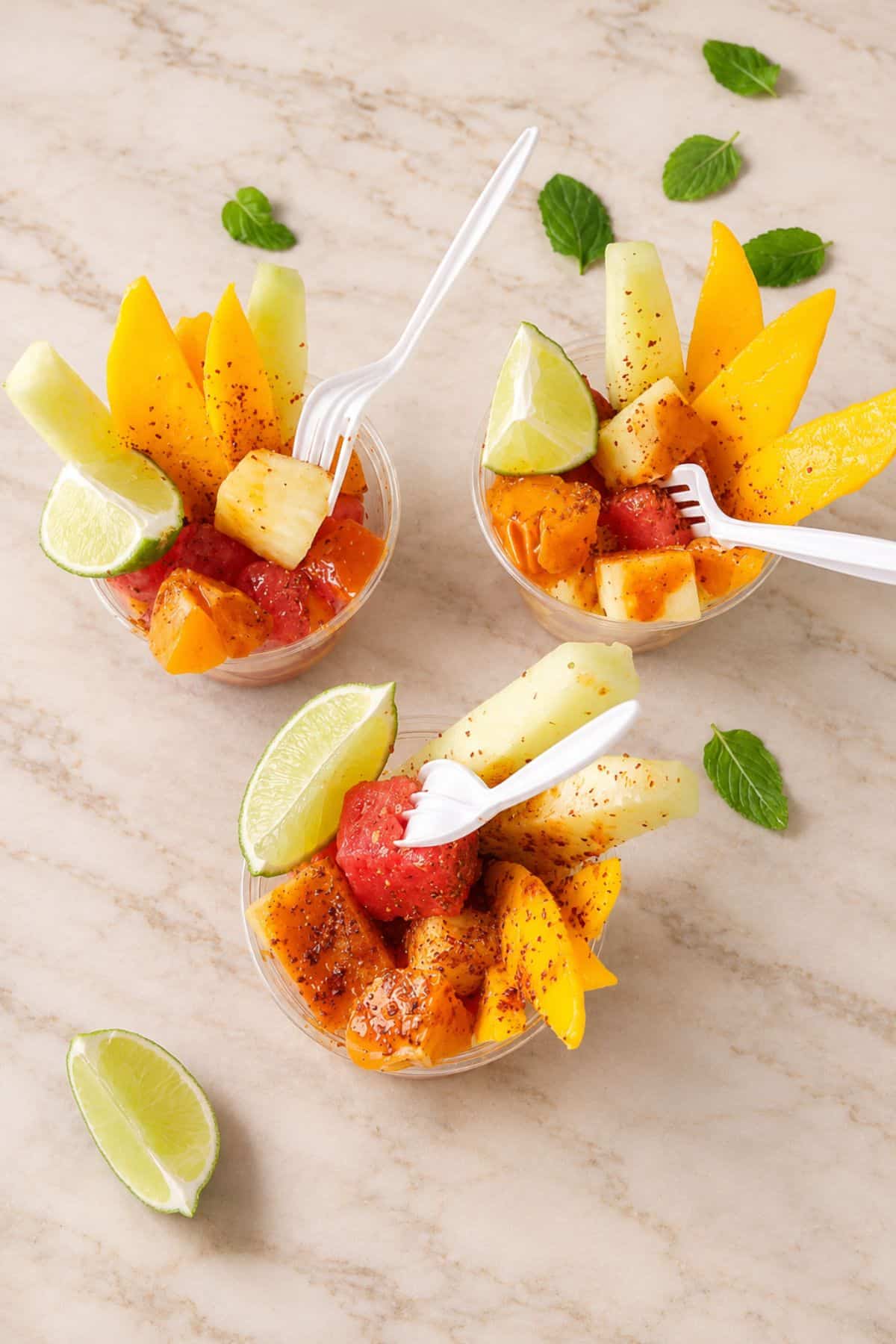
Fruit cups with chamoy and Tajín, also known as vasos de fruta, are a popular Mexican street-food snack with fresh fruit, crisp cucumber, and sweet, tangy, mildly spicy seasonings. Served in individual cups, they're refreshing on hot days and ready in 10 minutes without cooking. Pair them with Tuna Ceviche, or try Tropical Fruit Salad and Thai Mango Salad for other fresh fruit dishes.
Quick Look: Mexican Fruit Cups
- ⏱️ Prep Time: 10 minutes
- ⏲️ Total Time: 10 minutes
- 🍽️ Servings: 4 cups
- 🌶️ Flavor Profile: Sweet, tangy, salty, and mildly spicy
- 🥭 Texture: Juicy fruit with crisp cucumber
- 👌 Difficulty: Easy
- ☀️ Best For: Summer snacks, parties, and warm-weather gatherings
- 🍴 Cooking Method: No cooking required
- 🍍 Key Ingredients: Mango, pineapple, watermelon, oranges, cucumber, chamoy, Tajín, and lime
- Why This Recipe Works: Ripe but firm fruit holds its shape in individual cups, and crisp cucumber adds texture. Adding chamoy, Tajín, and lime shortly before serving keeps the fruit from becoming too soft or watery.
SUMMARIZE & SAVE THIS CONTENT ON
Jump to:
- Quick Look: Mexican Fruit Cups
- What Are Mexican Fruit Cups (Vasos de Fruta)?
- About This Mexican Fruit Cup Recipe
- Why You'll Love These Fresh Fruit Cups
- Chef's Notes from Valentina
- Ingredients
- Fruit Cup Variations
- How to Make Mexican Fruit Cups
- Mexican Fruit Bowl vs. Mexican Fruit Cups
- Mexican Fruit Seasoning
- Useful Tips for Making a Mexican Fruit Cup with Chamoy and Tajín
- FAQ About Mexican Fruit Cups
- What to Serve with Mexican Fresh Fruit Cups
- More Fruit Snacks and Sweet Treats
- Mexican Fruit Cups (Vasos de Fruta)
- How to Store
What Are Mexican Fruit Cups (Vasos de Fruta)?
Mexican fruit cups, known as vasos de fruta in Spanish, are a popular Mexican street-food snack sold at fruit stands and markets. They typically contain fresh fruit and crunchy vegetables cut into spears or cubes and served in individual cups.
Common choices include mango, watermelon, pineapple, cucumber, and jicama, although the selection varies by vendor and season.
Fresh lime juice, chamoy sauce, and Tajín give the fruit a sweet, tangy, salty, and mildly spicy flavor. Some versions use lime and chile-lime seasoning without chamoy.
About This Mexican Fruit Cup Recipe
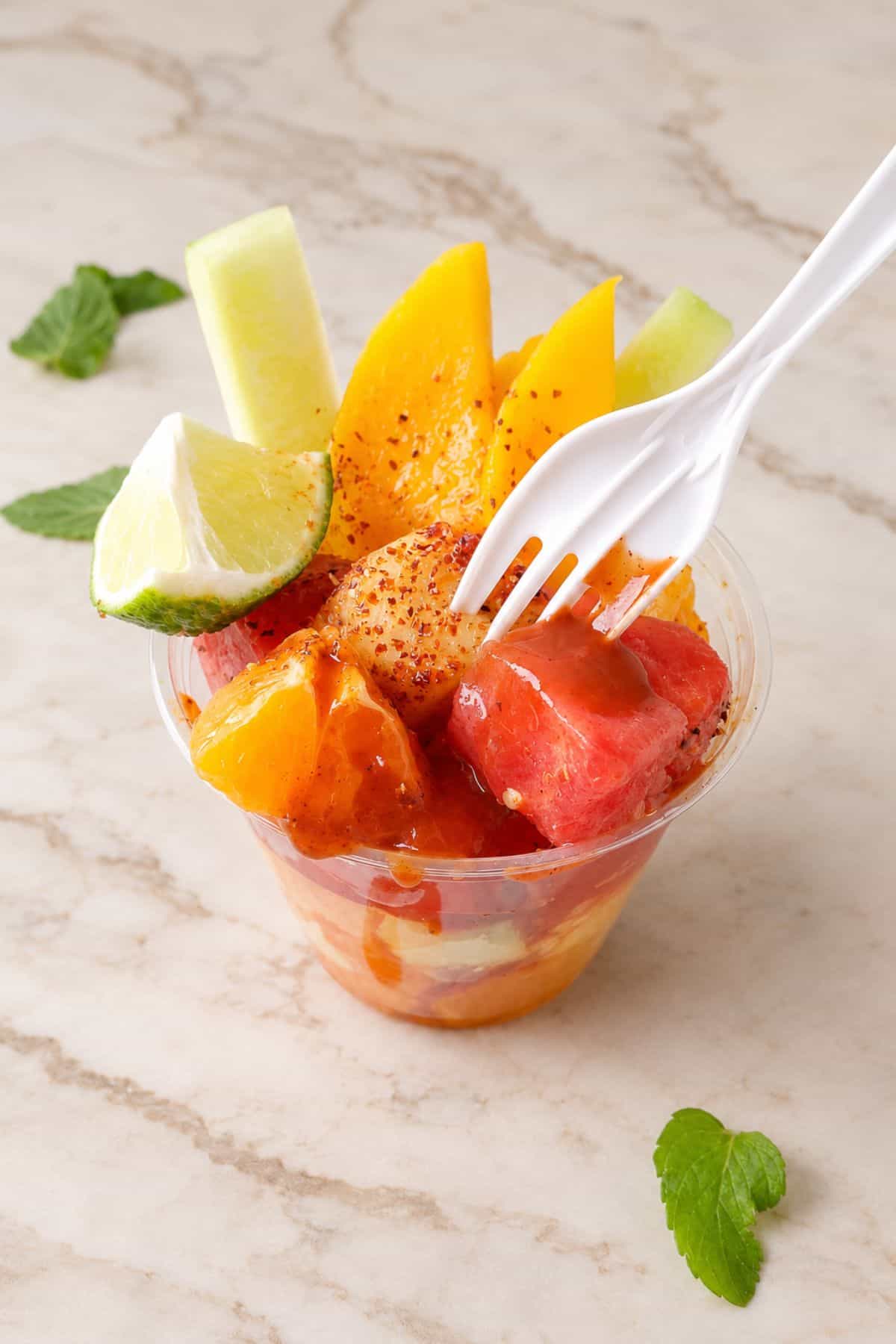
The Mexican fruit cup recipe combines sweet tropical fruit, juicy oranges, and crunchy cucumber with lime, chamoy, and Tajín. The mix of soft and crisp textures makes each cup refreshing, with a tangy, mildly spicy finish.
The chamoy adds a sweet-and-sour flavor, and Tajín provides a salty chile-lime seasoning. Together, they give these chamoy fruit cups their distinctive Mexican street-food taste.
Serve the fruit chilled on hot days or arrange the cups shortly before a party to keep everything fresh and crisp.
Why You'll Love These Fresh Fruit Cups
- Ready in 10 minutes. The recipe requires no cooking, and the fruit cups are ready to serve as soon as the produce is prepared.
- Refreshing flavors. Juicy fruit, tart lime, and Mexican chile-lime seasonings make a satisfying snack for warm weather.
- Easy to customize. Choose different fruits according to the season or adjust the chamoy and Tajín to suit your preference.
- Convenient individual portions. Four separate cups work well for parties, picnics, or an afternoon snack.
Ingredients
For the Fruit Cups
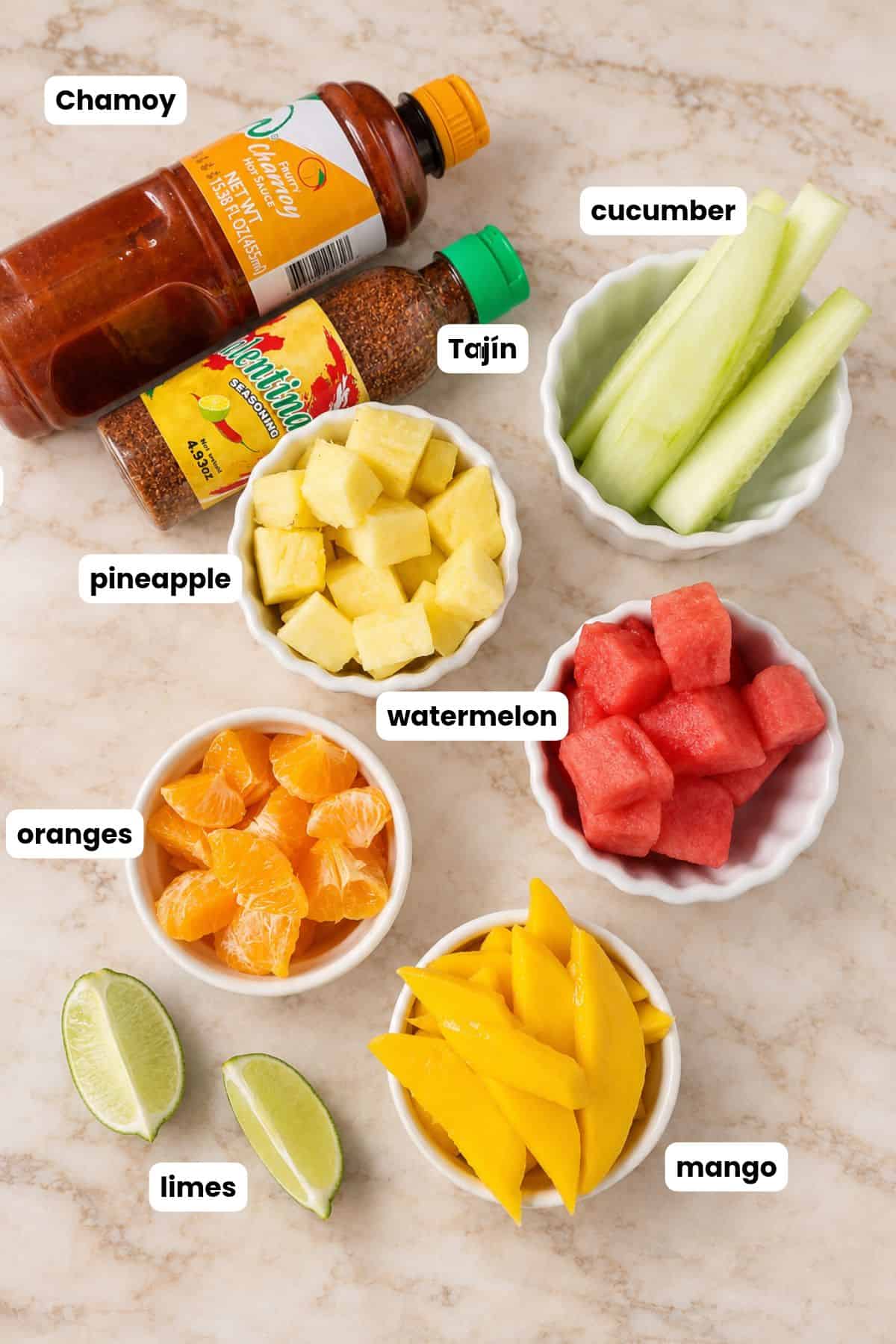
- Mango – 1 large, peeled and cut into spears. Choose a ripe but firm mango for its sweet, juicy flesh. Papaya works too, with a milder flavor and softer texture.
- Pineapple – 2 cups, peeled and cubed. Its sweet-tart flavor pairs especially well with chamoy and Tajín. Kiwi is a good substitute if you prefer something tangier.
- Watermelon – 2 cups, peeled and cubed. Sweet and juicy, watermelon makes the fruit cups especially refreshing.
- Cucumber – 1 medium, peeled and cut into spears. Adds a fresh, mild crunch among the sweeter fruits. Jicama is a good alternative if you prefer something firmer and slightly sweet.
- Navel oranges – 2, peeled and cubed. Their juicy, sweet-tart flesh pairs well with the other fruits. Grapefruit is a good choice if you prefer a sharper, slightly bitter citrus flavor.
Condiments
- Chamoy – as needed. A thick, tangy Mexican sauce with sweet, sour, salty, and spicy flavors. It's a classic topping for fruit with chamoy and Tajín. If unavailable, try apricot jam mixed with lime juice and chili powder.
- Tajín or chili powder – as needed. Tajín adds a tangy, salty chile flavor that pairs especially well with sweet fruit. Regular chili powder works too, but it won't have the same citrusy taste.
- Limes – 3. Fresh lime juice gives the fruit a tart, citrusy finish. Use 2 for the fruit cups and 1 for garnishing. Lemons can work as a substitute.
How to Make Mexican Fruit Cups
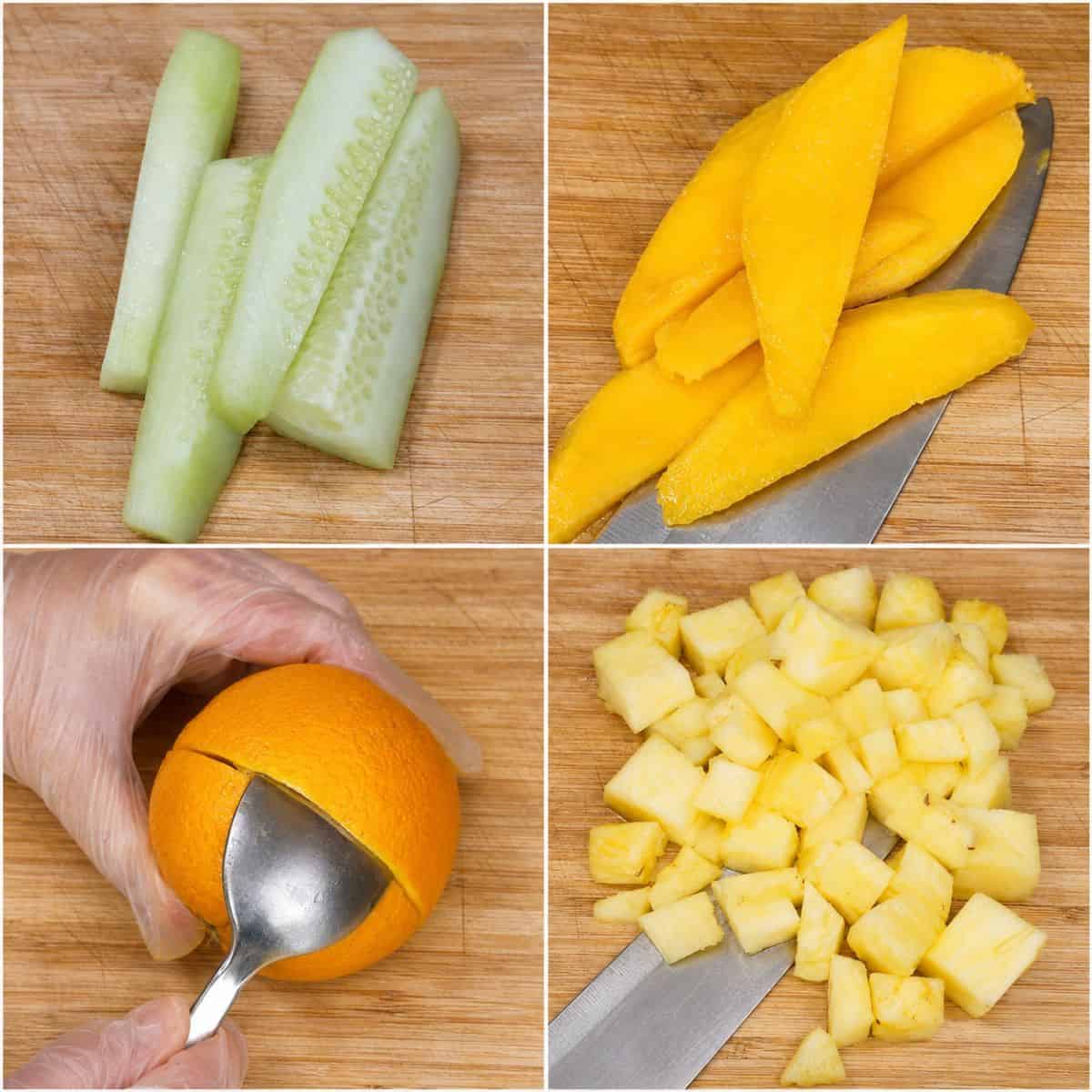
- Prepare the produce: Peel and cut the cucumber and mango into spears. Peel and cube the oranges, pineapple, and watermelon.
- Fill the cups: Arrange the prepared fruit and cucumber in four cups, alternating one piece of each type.
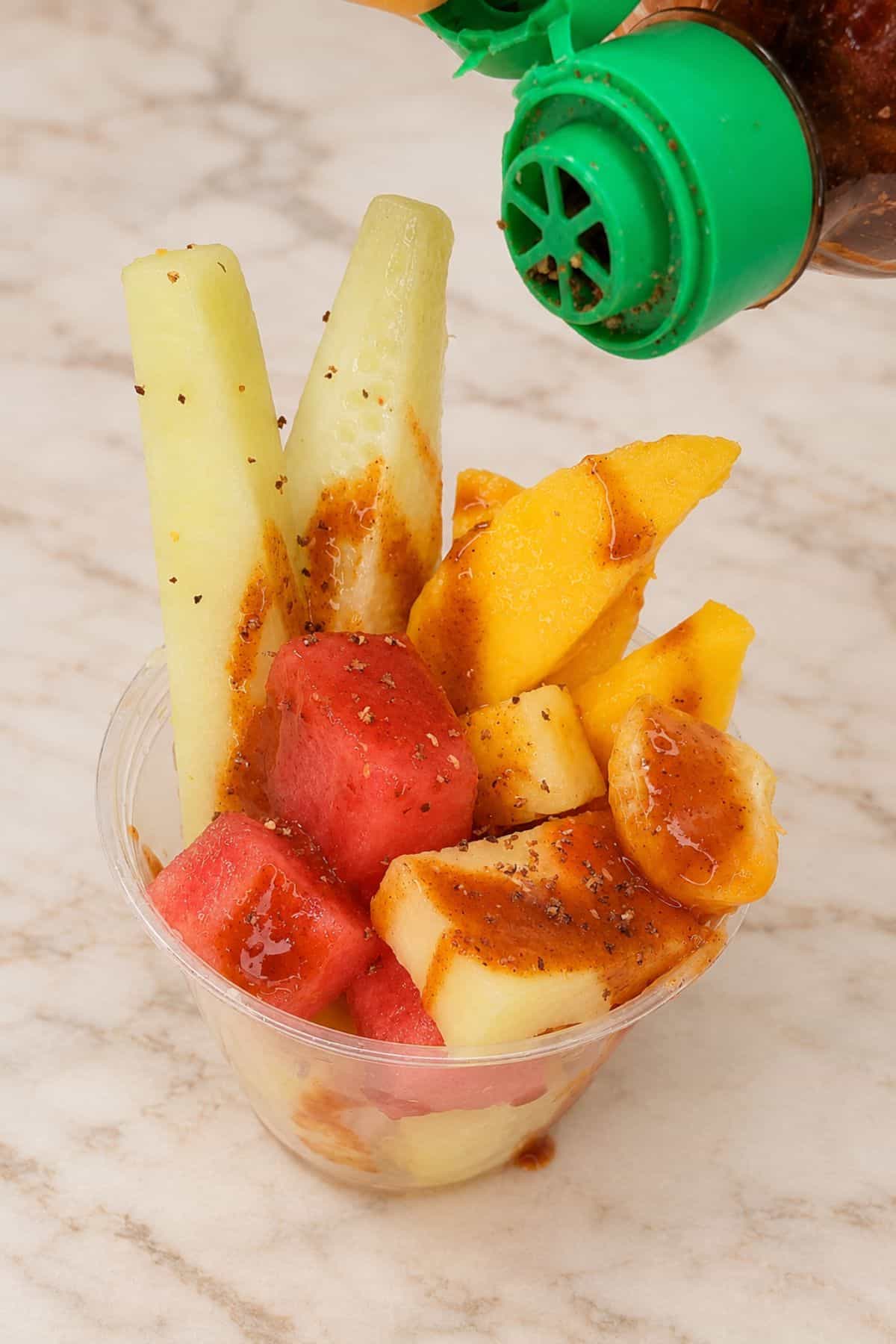
- Season the fruit: Squeeze the juice of ½ lime over the fruit in each cup. Drizzle a splash of chamoy over the fruit, then sprinkle Tajín on top.
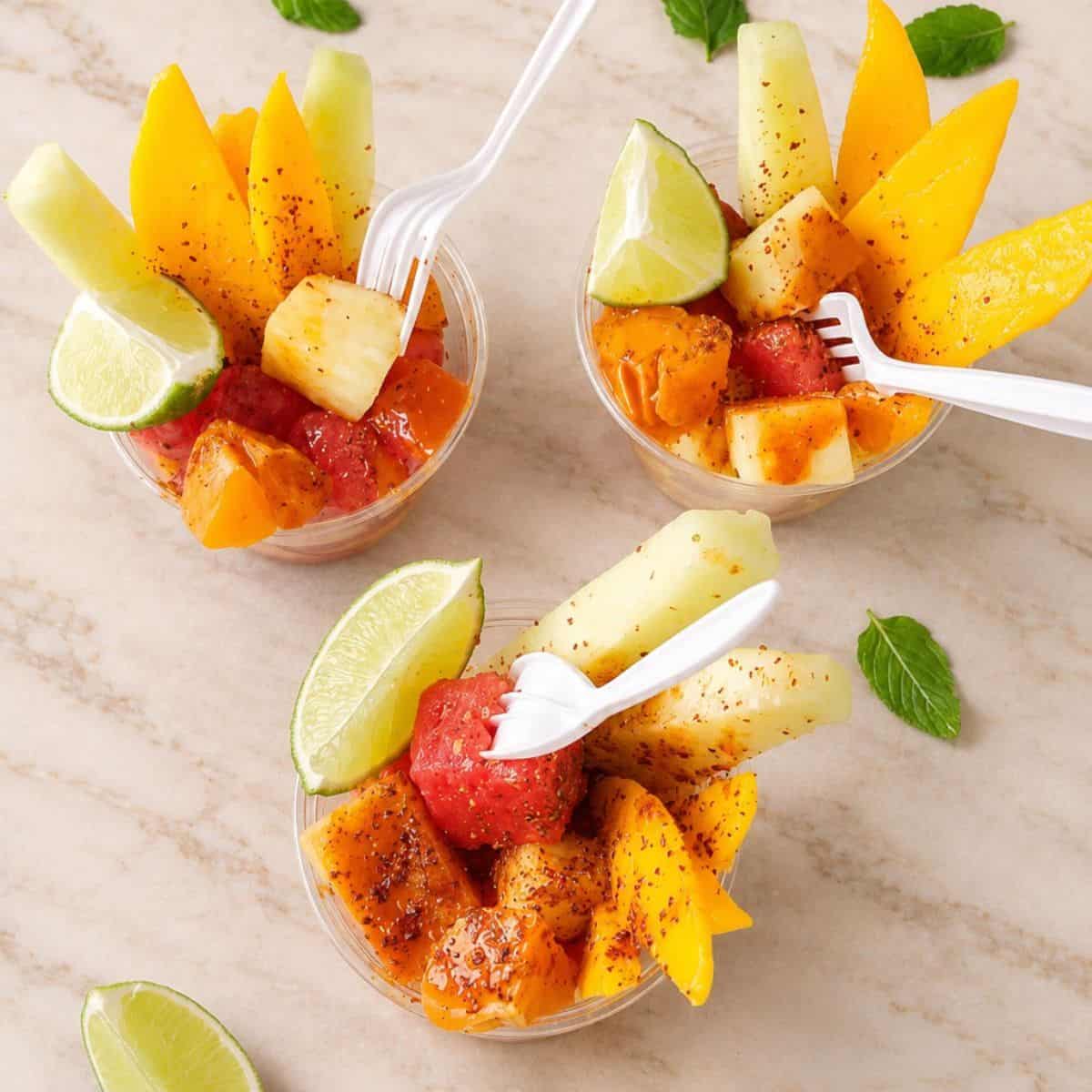
- Garnish and serve: Garnish each cup with a quarter of a lime and serve.
Note: Start with a few drops of chamoy and a light sprinkle of Tajín. Adjust the amounts to your taste.
Mexican Fruit Bowl vs. Mexican Fruit Cups
Mexican fruit cups (vasos de fruta) and Mexican fruit bowls (bionicos) are both popular Mexican snacks made with fresh fruit. However, their toppings and flavors are quite different.
Mexican fruit cups typically contain mango, watermelon, pineapple, cucumber, or jicama. They're served with lime juice, Tajín, and sometimes chamoy sauce for a refreshing combination of sweet, tangy, and mildly spicy flavors.
Bionicos, on the other hand, usually contain chopped apples, bananas, strawberries, and other fruits. They're topped with a sweet, creamy dressing made with condensed milk, Mexican crema, and sugar. Common toppings also include granola, shredded coconut, and raisins.
Mexican Fruit Seasoning
Mexican fruit seasoning typically combines ground chile peppers, salt, and dehydrated lime. The mixture has a tangy, salty flavor with mild heat.
Tajín is one of the most popular brands of chile-lime seasoning. Its classic blend contains chile peppers, lime, and sea salt. It's commonly sprinkled over fresh fruit and vegetables.
Besides fruit with Tajín, the seasoning works well with frozen drinks such as mangonadas, candies, micheladas, and other Mexican dishes. Similar chile-lime seasonings are also available from other brands.
FAQ About Mexican Fruit Cups
No. Tajín Clásico is a dry chile-lime seasoning made with chile peppers, lime, and sea salt. Chamoy is a fruity sauce with sweet, sour, salty, and spicy flavors. Both are commonly used to season fresh fruit.
Chamoy is commonly made with fruits such as apricots, mangoes, or plums, along with chile peppers, salt, and an acidic ingredient such as lime juice or vinegar. Some versions also contain sugar, depending on the recipe or brand.
Strawberries, grapes, and green apples are good options. Strawberries add a slightly tart flavor, grapes are sweet and juicy, and green apples provide a crisp texture. Cut larger pieces into bite-sized portions for easier serving.
Yes, but fresh fruit works better for this recipe. Frozen fruit usually becomes softer and releases more juice after thawing. If using frozen fruit, thaw it first and drain the excess liquid before assembling the cups.
What to Serve with Mexican Fresh Fruit Cups
- Extra seasoning: Offer additional chamoy, Tajín, or a sprinkle of sea salt for guests who prefer a stronger sweet-salty flavor.
- Citrus: Serve with extra lime or lemon wedges for a sharper, tangier finish.
- Creamy toppings: A dollop of yogurt or whipped cream gives the fruit a richer, creamier texture.
- Sweet toppings: Drizzle a little honey or agave nectar over tart fruit for extra sweetness.
- Crunchy toppings: Sprinkle granola or chopped nuts over the fruit shortly before serving for extra crunch.
- Savory dishes: Pair the fruit cups with Flank Steak Tacos, Shrimp Fajitas, or Nacho Corn on the Cob for a Mexican-inspired meal.
More Fruit Snacks and Sweet Treats



Did You Love This Recipe? If you make this recipe and love it, stop back, give it a 5-star rating ★★★★★ and leave a comment.
Mexican Fruit Cups (Vasos de Fruta)
Equipment
- 1 cutting board
- 1 Chef's knife
- 4 plastic cups
Ingredients
For the Fruit Cups
- 1 medium cucumber – peeled and cut into spears
- 1 large mango – peeled and cut into spears
- 2 navel oranges – peeled and cubed
- 2 cups pineapple – peeled and cubed
- 2 cups watermelon – peeled and cubed
Condiments
- 3 limes – 2 for serving and 1 for garnish
- Chamoy – as needed
- Tajín or chili powder – as needed
Instructions
- Prepare the produce: Peel and cut the cucumber and mango into spears. Peel and cube the oranges, pineapple, and watermelon.
- Fill the cups: Arrange the prepared fruit and cucumber in four cups, alternating one piece of each type.
- Season the fruit: Squeeze the juice of ½ lime over the fruit in each cup. Drizzle a splash of chamoy over the fruit, then sprinkle Tajín on top.
- Garnish and serve: Garnish each cup with a quarter of a lime and serve.Note: Start with a few drops of chamoy and a light sprinkle of Tajín. Adjust the amounts to your taste.
Recipe Notes
How to Store
Make Ahead: Cut the fruit in advance and refrigerate each variety separately in airtight containers. Assemble the cups and season with lime juice, chamoy, and Tajín shortly before serving to maintain their texture. Refrigerate: Store leftover fruit cups in an airtight container in the refrigerator for up to 3 days. The fruit may soften and release more juice over time, so it's best enjoyed sooner. Freeze: Freezing assembled fruit cups isn't recommended because the fruit becomes mushy after thawing. You can use leftover fruit in smoothies or smoothie bowls instead.Nutrition
** Nutrition labels on easyanddelish.com are for educational purposes only. This info is provided as a courtesy and is only an estimate, since the nutrition content of recipes can vary based on ingredient brand or source, portion sizes, recipe changes/variations, and other factors. We suggest making your own calculations using your preferred calculator, based on which ingredients you use, or consulting with a registered dietitian to determine nutritional values more precisely.
Please note that health-focused and diet information provided on easyanddelish.com is for educational purposes and does not constitute medical advice, nor is it intended to diagnose, treat, cure, or prevent disease. Consult with your doctor or other qualified health professional prior to initiating any significant change in your diet or exercise regimen, or for any other issue necessitating medical advice.