
Tapioca Pudding with Red Wine Recipe (Sagu de Vinho)

Sweet, fruity, and deliciously spiced, Tapioca Pudding brings together chewy cassava pearls, sweetened red wine, cinnamon, and cloves, finished with a spoonful of creamy vanilla custard.

Tapioca Pudding with Red Wine (Sagu de Vinho) brings a fruity Brazilian twist to the classic dessert. Popular in southern Brazil, this sagu dessert combines tender, chewy pearls with a glossy texture and sweet wine flavor. Enjoy it warm or chilled with creamy vanilla custard or ice cream. Try our No-Bake Tapioca Cake or browse more traditional Brazilian desserts.
Quick Look: Tapioca Pudding
- ⏱️ Prep Time: 18 minutes
- 🔥 Cook Time: 12 minutes
- ⏲️ Total Time: 30 minutes
- 🍽️ Servings: 4
- 🍷 Flavor Profile: Sweet and fruity, with cinnamon and clove notes
- 🥄 Texture: Thick and glossy, with tender, chewy tapioca pearls
- 👌 Difficulty: Easy
- 🎉 Best For: Make-ahead desserts, holidays, and dinner parties
- 🍳 Cooking Method: Instant Pot or stovetop
- 🍇 Key Ingredients: Tapioca pearls, red wine, sugar, cinnamon, and cloves
- Why This Recipe Works: The tapioca pearls absorb the fruity red wine and cinnamon-spiced syrup, giving Brazilian sagu de vinho its signature chewy texture and deep flavor. Creamy vanilla custard adds a smooth contrast to the sweet, spiced dessert.
SUMMARIZE & SAVE THIS CONTENT ON
Jump to:
- Quick Look: Tapioca Pudding
- Chef's Notes from Valentina
- Ingredients
- Substitutions And Additions
- How to Make Tapioca Pudding
- Stovetop Tapioca Pudding
- Make Crème Anglaise
- Expert Tips for Tapioca Pudding
- FAQ About Tapioca Pudding
- What to Serve with Tapioca Pudding
- More Pudding Recipes to Try
- Tapioca Pudding with Red Wine Recipe (Sagu de Vinho)
- Storage and Reheating
Ingredients
- Red wine – 1 ½ cups. Choose a fruity, dry wine such as Malbec, Merlot, or Cabernet Sauvignon. Its fruity notes and slight acidity balance the sugar and give the pudding its characteristic wine flavor.
- Tapioca pearls – ½ cup, medium-size and uncooked. Made from cassava starch, these pearls become translucent and chewy as they cook. Medium-size pearls work best for the texture of Brazilian sagu de vinho.
- Cinnamon stick – 1. Adds gentle sweetness and warm spice that complement the fruity red wine.
- Whole cloves – 4. Bring a slightly pungent, sweet spice note that deepens the flavor of the wine mixture.
For the Optional Crème Anglaise
- Heavy cream – 1 cup. Gives the custard its rich, silky consistency and rounds out the fruity wine flavor.
- Whole milk – 1 cup. Lightens the heavy cream and keeps the custard smooth enough to pour over the pudding.
- Egg yolks – 4 large. Thicken the custard and give it a smooth, velvety texture.
- Vanilla pod – ½ pod. Split lengthwise and scrape out the seeds. Use both the seeds and pod to infuse the milk and cream with vanilla during preparation.
How to Make Tapioca Pudding
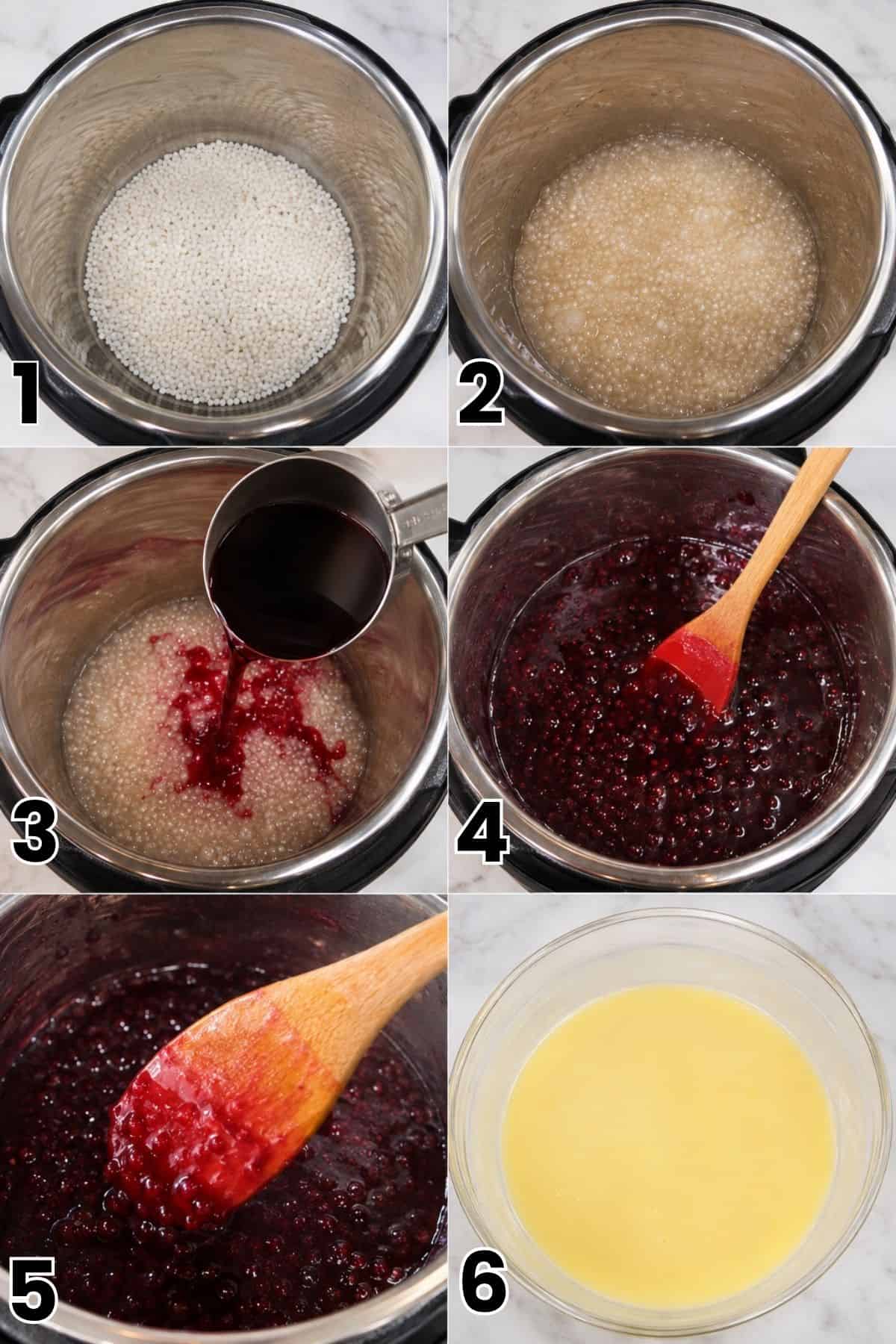
Instant Pot Tapioca Pudding
- Prepare the pot: Skip soaking the tapioca pearls when using an Instant Pot or pressure cooker. Lightly brush the bottom of the pot with vegetable oil to help prevent sticking. Add the uncooked pearls and 1 ½ cups of water. PIC. 1
- Pressure cook: Lock the lid, turn the valve to Sealing, and select High Pressure for 3 minutes. Use the Pasta button if your Instant Pot has one.
- Release the pressure: Allow 10 minutes of natural pressure release, then carefully release the remaining pressure. Some pearls will still be opaque, and others will be translucent. Most should be almost al dente. PIC. 2
- Separate the pearls: Stir thoroughly with a wooden spoon to loosen any clumps. Gently press the pearls against the sides of the pot if needed, but avoid mashing them. If some stick to the bottom, they should loosen once the finished pudding has cooled almost completely in the pot.
- Add the wine and spices: Pour in the red wine, grape juice, or a combination of both. Add the sugar, cinnamon stick, and cloves. Stir well, then select the Sauté setting. PIC. 3
- Finish cooking: Continue cooking for 12–15 minutes, stirring occasionally, until most pearls are translucent and the pudding is thick enough to coat the back of a spoon. Remove the cinnamon stick and, if possible, the cloves. PICS. 4 & 5
- Serve: Transfer the pudding to individual glasses or bowls. Serve warm, at room temperature, or chilled with vanilla ice cream or crème anglaise.
Stovetop Tapioca Pudding
- Soak the pearls: Combine the uncooked tapioca pearls with 1 ½ cups of water in a bowl or the nonstick saucepan you plan to use. Let them soak for approximately 45 minutes, keeping the soaking water for cooking.
- Add the wine and spices: Pour the red wine into the saucepan with the soaked pearls and their water. Add the sugar, cinnamon stick, and cloves. Stir until the sugar dissolves, then bring the mixture to a boil over medium-high heat.
- Cook until tender: Reduce the heat to medium and cook for 20–30 minutes, stirring occasionally to prevent sticking. The pearls should become soft, with several turning translucent.
Note: Tapioca pearls continue to absorb liquid as the pudding cools. If it becomes too thick, stir in a little water or grape juice until it reaches your preferred consistency. - Serve: Transfer the pudding to glasses, ramekins, or a serving bowl. Serve warm, at room temperature, or chilled with vanilla ice cream or crème anglaise.
Make Crème Anglaise
- Heat the milk and cream: Combine the heavy cream, milk, ⅓ cup of sugar, vanilla pod, and scraped vanilla seeds in a medium, heavy-bottomed saucepan. Heat over medium for about 2 minutes, until small bubbles begin forming around the edges. Remove from the heat before the mixture reaches a full boil.
- Infuse the vanilla: Let the mixture stand for 20 minutes. Meanwhile, whisk the egg yolks with the remaining ⅓ cup of sugar in a medium bowl until pale. Remove and discard the vanilla pod.
- Temper the egg yolks: Slowly pour one ladle of the warm cream mixture into the egg yolks, whisking immediately to combine. Repeat with another ladle until the yolk mixture feels warm to the touch. This gradual addition helps prevent the eggs from curdling.
- Thicken the custard: Pour the tempered egg mixture back into the saucepan with the remaining dairy mixture. Cook over medium heat for 5–7 minutes, stirring constantly, until the custard thickens enough to coat the back of a spoon.
- Strain and chill: Remove the saucepan from the heat and strain the custard through a fine-mesh sieve into a medium bowl to remove any lumps. Press plastic wrap directly against the surface to prevent a skin from forming. Refrigerate for approximately 2 hours before serving. PIC. 6

FAQ About Tapioca Pudding
Brazilian sagu commonly uses pearls made from cassava starch, also known as tapioca. The name comes from traditional sago, which comes from palm starch. Both ingredients produce similar-looking pearls, but their botanical sources differ.
Medium pearl tapioca works best for this recipe because it gives the dessert its characteristic chewy pearls. Instant tapioca has a different texture and cooking behavior. You can use it in other pudding recipes, but it requires different proportions and preparation.
Look for mostly translucent pearls with a tender, chewy texture. Some may retain a small opaque center, depending on the pearl size and cooking method. Taste a few to check that they no longer have a hard center.
What to Serve with Tapioca Pudding
- Ice Cream: Add a scoop of Mango Ice Cream with Condensed Milk for a fruity pairing. Vanilla ice cream also works well with the spiced wine syrup.
- Cakes: Pair the pudding with Brazilian Carrot Cake or Berry Cake. Both add a baked dessert option alongside the soft tapioca pearls.
- Cookies: Serve with Biscoito de Nata, Brazilian cream cookies with a delicate, crumbly texture. They make a good contrast to the pudding.
- Brazilian Desserts: Add Brigadeiros to the dessert table. These Brazilian chocolate truffles provide a rich chocolate contrast to the fruity wine pudding.




Did You Love This Recipe? If you make this recipe and love it, stop back, give it a 5-star rating ★★★★★ and leave a comment.

Tapioca Pudding with Red Wine Recipe (Sagu de Vinho)
Equipment
- Instant Pot or Saucepan
- wooden spoon
- whisk
Ingredients
For the Red Wine Tapioca Pudding
- ½ cup medium-sized uncooked tapioca pearls
- 1 ½ cups water
- 1 ½ cups red wine, such as Malbec, Merlot, or Cabernet Sauvignon
- 1 cup sugar or double the amount of monk fruit sweetener for a sugar-free tapioca pudding
- 1 cinnamon stick
- 4 whole cloves
For the Crème Anglaise (Optional)
- 1 cup whole milk
- 1 cup heavy cream
- ⅔ cup sugar
- ½ vanilla pod – split lengthwise and seeds scraped out (use both the pod and seeds)
- 4 large egg yolks
Instructions
Instant Pot Tapioca Pudding
- Prepare the pot: Skip soaking the tapioca pearls when using an Instant Pot or pressure cooker. Lightly brush the bottom of the pot with vegetable oil to help prevent sticking. Add the uncooked pearls and 1 ½ cups of water.
- Pressure cook: Lock the lid, turn the valve to Sealing, and select High Pressure for 3 minutes. Use the Pasta button if your Instant Pot has one.
- Release the pressure: Allow 10 minutes of natural pressure release, then carefully release the remaining pressure. Some pearls will still be opaque, and others will be translucent. Most should be almost al dente.
- Separate the pearls: Stir thoroughly with a wooden spoon to loosen any clumps. Gently press the pearls against the sides of the pot if needed, but avoid mashing them. If some stick to the bottom, they should loosen once the finished pudding has cooled almost completely in the pot.
- Add the wine and spices: Pour in the red wine, grape juice, or a combination of both. Add the sugar, cinnamon stick, and cloves. Stir well, then select the Sauté setting.
- Finish cooking: Continue cooking for 12–15 minutes, stirring occasionally, until most pearls are translucent and the pudding is thick enough to coat the back of a spoon. Remove the cinnamon stick and, if possible, the cloves.
- Serve: Transfer the pudding to individual glasses or bowls. Serve warm, at room temperature, or chilled with vanilla ice cream or crème anglaise.
Stovetop Tapioca Pudding
- Soak the pearls: Combine the uncooked tapioca pearls with 1 ½ cups of water in a bowl or the nonstick saucepan you plan to use. Let them soak for approximately 45 minutes, keeping the soaking water for cooking.
- Add the wine and spices: Pour the red wine into the saucepan with the soaked pearls and their water. Add the sugar, cinnamon stick, and cloves. Stir until the sugar dissolves, then bring the mixture to a boil over medium-high heat.
- Cook until tender: Reduce the heat to medium and cook for 20–30 minutes, stirring occasionally to prevent sticking. The pearls should become soft, with several turning translucent.Note: Tapioca pearls continue to absorb liquid as the pudding cools. If it becomes too thick, stir in a little water or grape juice until it reaches your preferred consistency.
- Serve: Transfer the pudding to glasses, ramekins, or a serving bowl. Serve warm, at room temperature, or chilled with vanilla ice cream or crème anglaise.
Make Crème Anglaise
- Heat the milk and cream: Combine the heavy cream, milk, ⅓ cup of sugar, vanilla pod, and scraped vanilla seeds in a medium, heavy-bottomed saucepan. Heat over medium for about 2 minutes, until small bubbles begin forming around the edges. Remove from the heat before the mixture reaches a full boil.
- Infuse the vanilla: Let the mixture stand for 20 minutes. Meanwhile, whisk the egg yolks with the remaining ⅓ cup of sugar in a medium bowl until pale. Remove and discard the vanilla pod.
- Temper the egg yolks: Slowly pour one ladle of the warm cream mixture into the egg yolks, whisking immediately to combine. Repeat with another ladle until the yolk mixture feels warm to the touch. This gradual addition helps prevent the eggs from curdling.
- Thicken the custard: Pour the tempered egg mixture back into the saucepan with the remaining dairy mixture. Cook over medium heat for 5–7 minutes, stirring constantly, until the custard thickens enough to coat the back of a spoon.
- Strain and chill: Remove the saucepan from the heat and strain the custard through a fine-mesh sieve into a medium bowl to remove any lumps. Press plastic wrap directly against the surface to prevent a skin from forming. Refrigerate for approximately 2 hours before serving.
Recipe Notes
Storage and Reheating
Refrigerate: Transfer the tapioca pudding to an airtight container and press plastic wrap against the surface to prevent a skin from forming. Refrigerate for 3–4 days. Crème Anglaise: Store separately in a covered container in the refrigerator for up to 3 days. Freezer: Freezing is not recommended for the best texture. The tapioca pearls may become less pleasant after thawing, and custard sauces can separate. Reheating: Warm individual portions gently in a saucepan over low heat, stirring occasionally. Add a splash of water or grape juice if the pudding becomes too thick. The pudding can also be enjoyed cold. Serve the crème anglaise chilled.Nutrition
** Nutrition labels on easyanddelish.com are for educational purposes only. This info is provided as a courtesy and is only an estimate, since the nutrition content of recipes can vary based on ingredient brand or source, portion sizes, recipe changes/variations, and other factors. We suggest making your own calculations using your preferred calculator, based on which ingredients you use, or consulting with a registered dietitian to determine nutritional values more precisely.
Please note that health-focused and diet information provided on easyanddelish.com is for educational purposes and does not constitute medical advice, nor is it intended to diagnose, treat, cure, or prevent disease. Consult with your doctor or other qualified health professional prior to initiating any significant change in your diet or exercise regimen, or for any other issue necessitating medical advice.
Did you make this recipe?
Comment and rate the recipe. Also follow us on Pinterest at @easyanddelish for more delish recipes.Post first published on February 10, 2012.

Thank you for the recipe! My husband is Brazilian and he had bought a bag of Sagu at our local Brazilian market so we can make this. He hasn’t had sagu de vinho since he was a little kid and he absolutely loved this, so nostalgic for him. I also really enjoyed it, thank you!
Hi Stef! The pleasure was all mine! I am so happy you and your husband enjoyed our red wine tapioca pudding recipe.
This looks gorgeous!! And delish i-- thanks.
This Tapioca Pudding looks so good!
This sagu de vinho is a very traditional Braizlian dessert which cna be cooked either on the stovetop or in the pressure cooker. So delicious!
Very creative never I had though fusing these two together, such a nice fusion.
Red wine tapioca pudding (sagu de vinho) is a tradiitonal Brazilian recipe from Rio Grande do Sul. It goes great after eating a churrasco!
Thank you for the recipe! I’m actually looking for ideas to recreate Sagú with Chia Seeds instead! I just wanted to point out that Lactose-free milk is not the same a “dairy free”....
Dairy free means it’s plant based. ♀️
Thank you Priscilla! I know that dairy-free is plant-based milk such as almond milk or coconut milk. But you can use any of your choice either is a dairy but lactose-free milk or a dairy-free/plant-based depending on your diet/needs/wants. I think we can all agree any dairy-free milk (palnt-based) is also lactose-free because it doesn't contain lactose which is only found in dairy. I hope this sagu recipe can inspire you to make your chia pudding. It is a very traditional recipe in Southern Brazil although made with tapioca pearl instead of chia seeds. Enjoy!
Such a delicious recipe and a different flavor for a tapioca pudding. My family loved it! Thank you!
I lived in Curitiba in the mid 60's and my friends made sagu with wine this way. Since I had no kitchen, I never learned to prepare this dessert which I love. Thank you for the recipe.
Hi, Lorenza! Thanks for your visit!! I am glad that you'll have the opportunity to make Sagu for the first time. This is an easy and very flavorful recipe. I hope you enjoy it. If you have any questions, I'll be happy to answer them. Have a nice evening!
Esta receita e' otima! provei, e fica realmente deliciosa. Thank you so much for sharing it with us who have not had the chance to learn it i Brazil!
Eva
Obrigada, Eva! You made my day preparing this dessert at home. It is very popular in Southern Brazil, especially in Rio Grande do Sul. All that I can say about it is I love, love, love it...Please, stop by by Thursday again. I'll be publishing a wonderful casserole recipe.